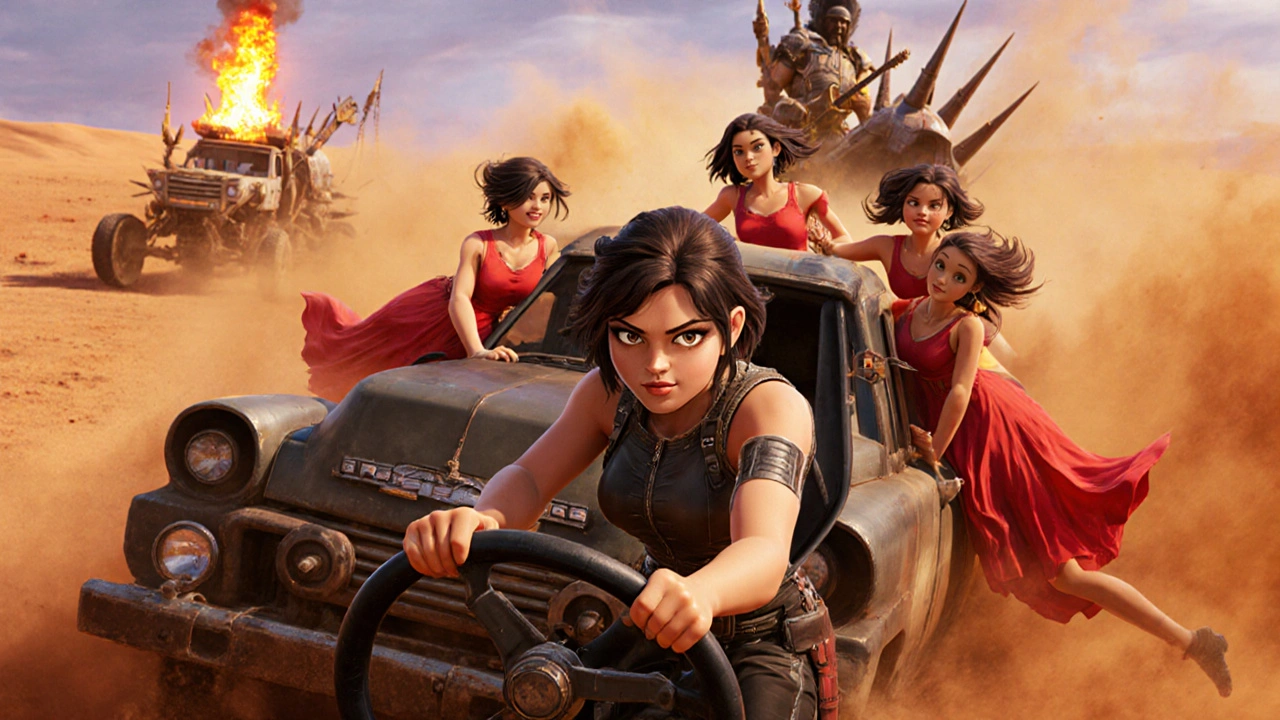
Mad Max Fury Road: Action, Design, and the Rise of Modern Post-Apocalyptic Cinema
Mad Max Fury Road, a 2015 action film directed by George Miller, is a visceral, nearly dialogue-free chase through a desert wasteland that became a global phenomenon. Also known as Fury Road, it didn’t just revive a 30-year-old franchise—it reset expectations for what an action movie could be. No CGI armies. No slow-motion hero poses. Just real cars, real stunts, real sand, and a soundtrack made of roaring engines and screaming metal.
What makes Mad Max Fury Road stand out isn’t just the chaos—it’s the clarity. Every frame serves the story. The vehicles? Each one tells you who owns it, what they value, and how far they’ll go to survive. The War Boys? Not faceless villains—they’re brainwashed kids raised on gasoline and gospel. The film’s world isn’t just built; it’s lived in. And that’s why it connects with people who’ve never seen a post-apocalyptic movie before. It’s not about zombies or nuclear fallout. It’s about fuel, water, and the will to keep moving.
Related entities like post-apocalyptic films, a genre that uses collapse to expose what humans truly value, have changed since Fury Road. Before, these stories focused on survival in silence—think The Road or The Last of Us. Fury Road flipped it: survival as a scream. It’s action as poetry. And it proved you don’t need exposition to make an audience feel something. The visuals alone—dust storms, flame-throwing guitars, a war rig full of women—say everything.
George Miller didn’t just direct a movie. He built a machine. The production design, the practical effects, the sound design—all of it works like a single, unstoppable engine. That’s why you’ll find Fury Road referenced in pieces about action film design, how physical sets, real stunts, and raw sound create immersion, and why it’s still studied in film schools years later. It’s a textbook example of how constraints breed creativity. Limited budget? No problem. Just use real vehicles, real drivers, and real courage.
And then there’s the women. Not sidekicks. Not love interests. Not victims. They’re the engine. Furiosa isn’t a hero because she’s tough—she’s a hero because she refuses to let the world break her spirit. That’s why Fury Road isn’t just a movie for action fans. It’s for anyone who’s ever been told to sit down, be quiet, or know their place.
Below, you’ll find posts that dig into the same worlds Fury Road helped reshape—from how post-apocalyptic TV shows use collapse to tell human stories, to how sound design turns a car crash into something unforgettable. These aren’t just reviews. They’re deep dives into the craft behind the chaos. And if you’ve ever wondered why Fury Road still feels so alive, you’ll find your answer here.
Mad Max: Fury Road redefined action cinema with zero dialogue, real stunts, and powerful visuals. It tells a gripping story through color, movement, and sound-not words.
View More