
When you’re trying to find something your child can watch that’s actually worth their time, it’s not about keeping them quiet-it’s about giving them something that helps them grow. The right show can build vocabulary, teach empathy, spark curiosity, and even lay the groundwork for math and science thinking. The problem? Too many so-called "educational" shows are just cartoons with flashcards slapped on. The good ones? They sneak learning into stories kids actually care about.
Preschoolers (Ages 2-5): Learning Through Play
At this age, kids learn by doing, not by listening. Shows that work best for preschoolers mirror real-life routines, use repetition, and let kids predict what happens next. They don’t rush. They pause. They sing. They let silence happen.
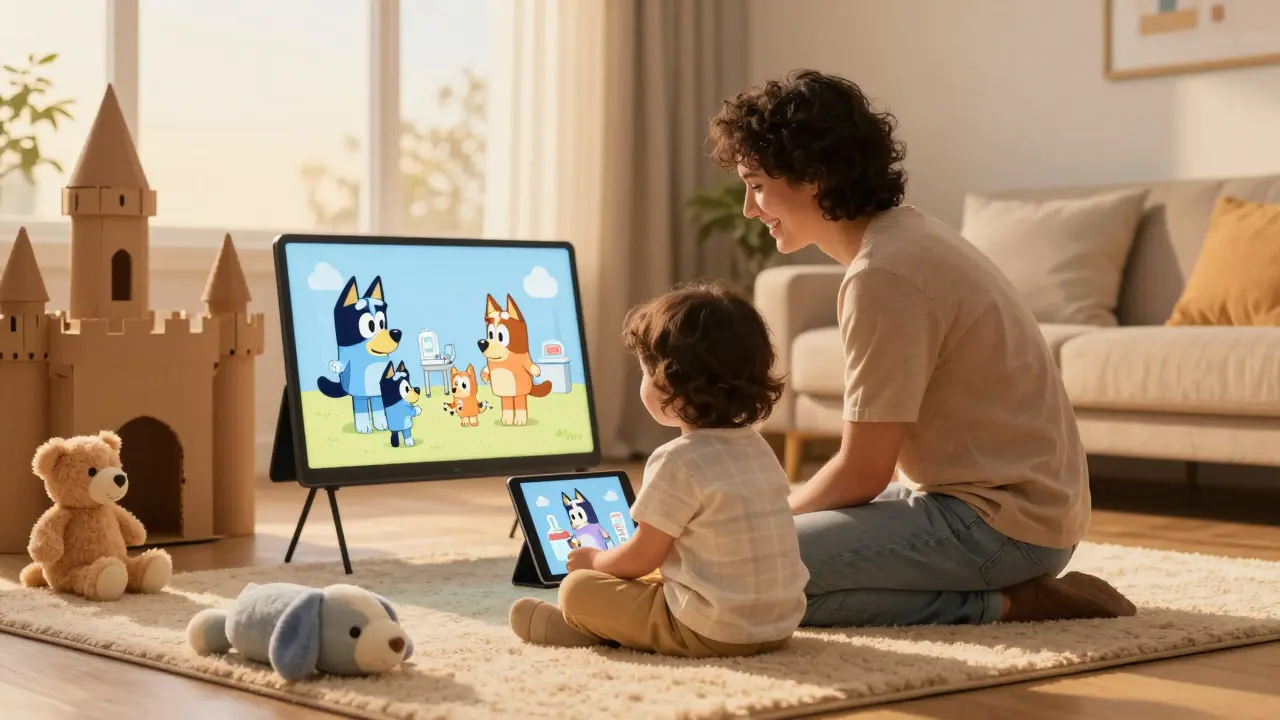
Bluey is the standout. It’s Australian, animated, and doesn’t talk down to kids. Each 7-minute episode follows a blue heeler puppy and her family through everyday scenarios-waiting in line, cleaning up, playing pretend. The show doesn’t have a moral slapped on at the end. Instead, it shows how emotions work, how to solve small conflicts, and how adults model patience. Parents notice their kids repeating Bluey’s phrases like, "Let’s play hospitals," and then actually doing it in real life.
Peppa Pig still holds up. Yes, it’s simple. Yes, it’s repetitive. But that’s the point. Peppa’s world is small, predictable, and full of relatable moments: going to school, visiting grandma, getting stuck in the mud. The dialogue is clear, slow, and uses everyday words. It’s not flashy, but it teaches social cues-like taking turns, saying sorry, and asking for help.
Curious George (2006 version) is another quiet winner. The show follows a curious monkey and his human, The Man in the Yellow Hat, as they explore science and nature. Each episode ends with George trying something new-building a windmill, planting seeds, measuring rain. The narration is calm, and the science is hands-on. No robots, no lasers, just curiosity.
What to avoid: Shows with rapid cuts, loud sound effects, or characters who scream when upset. Kids under five don’t need excitement-they need calm, clear models of behavior.
Elementary Kids (Ages 6-10): Building Skills, Not Just Facts
By elementary school, kids are reading, doing math, and starting to ask "why?" They’re ready for shows that connect learning to real problems. The best ones don’t feel like school-they feel like adventures.
Wild Kratts is a science show disguised as a superhero series. Chris and Martin Kratt use "creature power suits" to become animals and explore their habitats. Each episode teaches biology, ecology, and animal behavior in a way that feels like a mission. Kids remember that a pangolin rolls into a ball because of predators, not because a narrator told them to. The show’s creators worked with zoologists, and every fact is accurate.
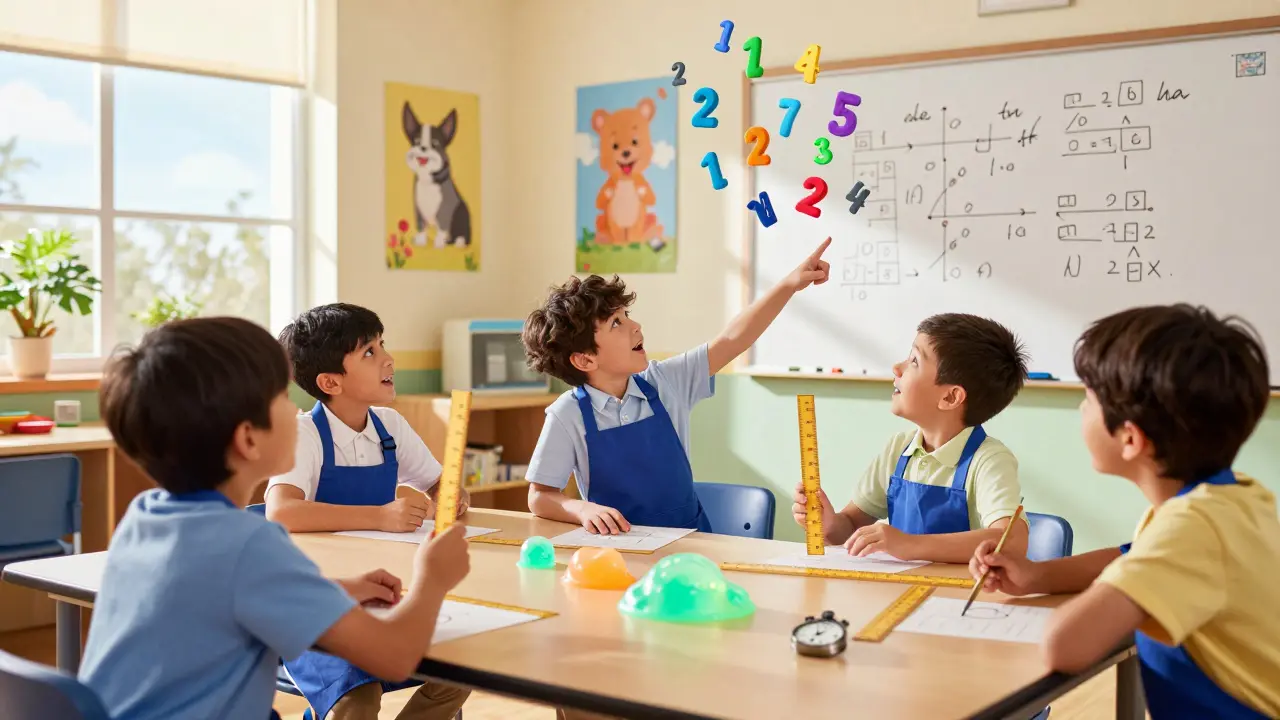
Odd Squad is a live-action math mystery show. Two kid agents solve weird problems using math-like stopping a blob that grows when it’s cold, or figuring out why a bus keeps disappearing. The show doesn’t teach formulas. It teaches how to think: collect data, test ideas, try again. One episode had kids measuring how far a ball rolls on different surfaces. My neighbor’s 8-year-old came home and started timing her toy cars with a stopwatch.
Arthur has been on the air since 1996, and it still works. It tackles social issues-bullying, sibling rivalry, learning differences-with warmth and honesty. Arthur has a friend with dyslexia. Another friend uses a wheelchair. The show doesn’t make these traits the punchline. It makes them part of the story. It’s one of the few shows that teaches emotional intelligence without being preachy.
Sid the Science Kid is perfect for kids who ask endless questions. Each episode starts with Sid wondering, "Why does my toast get brown?" Then he investigates, talks to his teacher, and experiments. The pacing is slow, the visuals are bright, and the answers are simple. It turns curiosity into a habit.
What to avoid: Shows that turn learning into a competition or reward system. If the only way a kid learns is because they get a trophy or a sticker, they’re not learning for understanding-they’re learning for the prize.
Tweens (Ages 11-13): Connecting Learning to the Real World
Tweens are starting to care about how things work in the world. They want to know why things are the way they are. They’re ready for shows that don’t dumb things down.
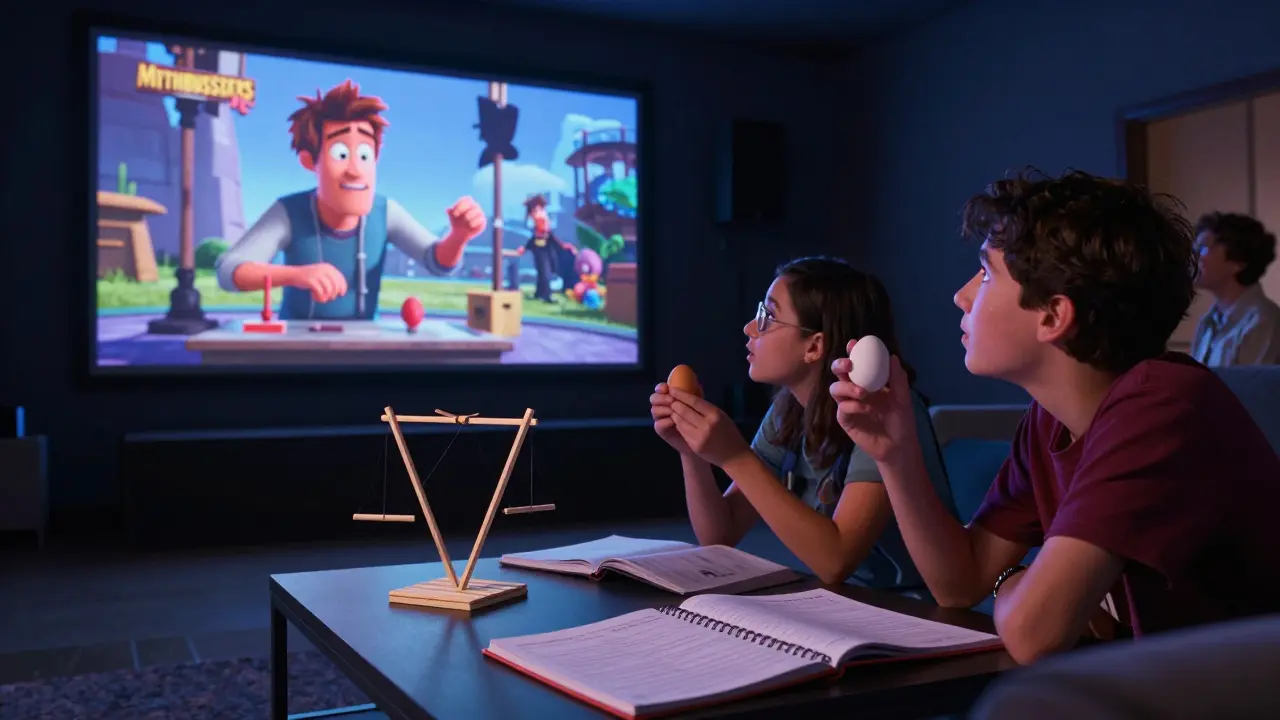
MythBusters Jr. is the reboot of the classic show, now hosted by science educator Adam Savage with a team of smart, enthusiastic teens. Each episode tests myths-can you really cook an egg on a car hood? Can you build a working catapult from junk? The show doesn’t just show results. It shows the process: hypothesis, trial, error, revision. It’s not about being right. It’s about figuring out how to find out.
Bill Nye Saves the World is fast, funny, and tackles real issues: climate change, vaccines, AI. Bill doesn’t lecture. He invites scientists, activists, and even comedians to debate. One episode on social media and mental health had a psychologist and a TikTok creator talking side by side. It’s not perfect, but it’s honest. Tweens see that science isn’t just in labs-it’s in their phones, their diets, their opinions.
Brainchild is a Netflix show that makes complex topics feel personal. One episode explores how the brain learns. Another dives into the science of sleep. The host, a young scientist named Dr. Kari, uses real experiments with kids. She doesn’t explain with diagrams-she lets kids try things. Like putting a brain in a jar to see how it reacts to sugar. It’s weird. It’s gross. It’s unforgettable.
Horrible Histories (UK version) turns history into comedy. It’s not about dates and kings. It’s about what people ate, how they bathed, why they believed in dragons. The sketches are silly, but the facts are rock-solid. Kids remember that Romans didn’t have toothbrushes-because they used urine to clean their clothes. That’s the kind of detail that sticks.
What to avoid: Shows that present opinions as facts, or that use clickbait titles like "You Won’t BELIEVE What Happened Next!" Tweens are starting to spot manipulation. They need shows that respect their intelligence.
What Makes a Show Truly Educational?
Not all shows labeled "educational" are created equal. Here’s what separates the good from the noise:
- It’s not just facts-it’s thinking. Does the show ask kids to predict, question, or test ideas?
- It’s slow enough to absorb. Fast cuts and loud music overload young brains. Calm pacing helps learning stick.
- It shows real people. Animated animals are fine, but real kids solving real problems? That’s powerful.
- It doesn’t reward behavior with prizes. Learning shouldn’t feel like a game with points.
- It’s accurate. If a show gets basic science wrong, it’s not helping-it’s misleading.
Look for shows made by educators, scientists, or child psychologists-not just marketers. Check the credits. If you see the National Science Foundation or a university listed, that’s a good sign.
Screen Time Isn’t the Enemy-Bad Content Is
Parents often feel guilty about screen time. But the real issue isn’t how long kids watch-it’s what they’re watching. A 20-minute episode of Bluey can teach more about emotions than an hour of mindless YouTube clips. A 15-minute episode of Odd Squad can spark a math conversation that lasts all week.
Try this: Watch one episode with your child. Then ask: "What did you notice?" or "What would you try?" Don’t quiz them. Just listen. That’s when you’ll see the learning happen.
Where to Find These Shows
Most of these shows are on major streaming platforms:
- Disney+: Bluey, Wild Kratts, Arthur
- Netflix: MythBusters Jr., Brainchild, Horrible Histories
- Amazon Prime: Odd Squad, Sid the Science Kid
- PBS Kids: Curious George, Sid the Science Kid, Wild Kratts (free on their app)
- YouTube: Official channels for Bill Nye Saves the World, National Geographic Kids
Many have free apps with episodes, games, and printable activities. No subscription needed for PBS Kids.
Final Tip: Co-Watch When You Can
You don’t need to sit with them every minute. But if you watch just one episode a week together, you open the door to real conversations. Ask: "What part surprised you?" or "Would you do that differently?" That’s when screens stop being a babysitter-and start being a bridge.
Are educational shows better than books for learning?
Neither is better-they’re different. Books build focus, imagination, and vocabulary through quiet reading. Shows build visual understanding, emotional recognition, and real-world connections through storytelling. The best approach is a mix: read together in the morning, watch a short educational show after lunch. One supports inner thinking. The other supports outer observation.
Can too much screen time ruin the benefits of educational shows?
Yes. Even the best show loses its impact if it’s the only thing a child does all day. Learning happens through doing-playing outside, building with blocks, talking to people. Educational shows are a tool, not a replacement. Limit screen time to 30-60 minutes per day for preschoolers, and 1-1.5 hours for older kids. Always pair it with hands-on activities.
Are there any free educational shows without ads?
Yes. PBS Kids has a free app with full episodes of Curious George, Wild Kratts, and Sesame Street-no ads, no subscriptions. The PBS Kids Video app is available on iOS, Android, Roku, and Fire TV. Public libraries also often offer free access to Kanopy Kids, which includes educational documentaries and shows.
What if my child only wants to watch the same show over and over?
That’s normal-and actually helpful. Repetition helps kids internalize language, patterns, and concepts. If your 4-year-old watches Bluey 10 times in a row, they’re not being lazy. They’re mastering the emotional cues, the problem-solving, the rhythm of the story. Let them. After a few weeks, gently introduce a new show. Don’t force it.
Do these shows work for kids with learning differences?
Many do. Shows like Arthur and Sid the Science Kid include characters with learning differences and model inclusive behavior. The pacing and clear visuals help kids with ADHD or autism process information. Shows that use repetition, clear visuals, and emotional storytelling are especially helpful. Avoid fast-paced, chaotic shows. Stick to calm, structured content.
If you’re looking for more, start with one show from each age group and watch it together. Then ask your child what they liked. Their answer will tell you more than any list ever could.