
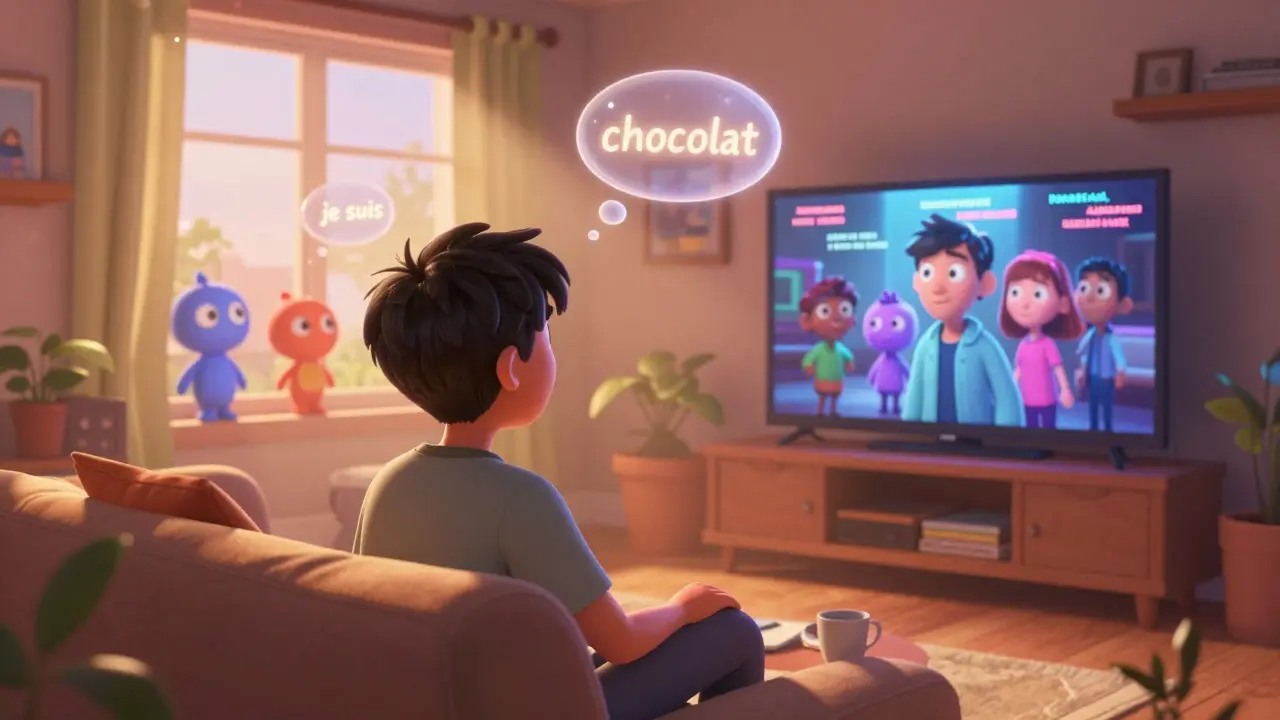
Want to learn a new language without cracking open a textbook? You’re already doing it-every time you watch a show on Netflix, Disney+, or Hulu. Streaming platforms are the most underused language learning tool out there. Millions of people watch foreign films and series every day, but few realize they’re sitting on a goldmine of real, spoken language. The secret isn’t just watching-it’s how you watch.
Why Subtitles Work Better Than You Think
Most beginners reach for English subtitles because it feels safer. But here’s the truth: if you’re watching a Spanish show with English subtitles, you’re not learning Spanish. You’re learning how to read English while listening to Spanish. That’s not language acquisition-it’s translation practice. Start with subtitles in the language you’re learning. If you’re studying French, turn on French subtitles. Your brain starts connecting sounds to written words in real time. You see the word chocolat and hear it pronounced. You notice how je suis sounds like j’sui. These are the tiny details textbooks never teach. A 2023 study from the University of Copenhagen tracked 200 learners using subtitled content for 30 minutes a day over six months. Those using target-language subtitles improved their listening comprehension by 42% compared to those using English subtitles. Their vocabulary grew faster too. Why? Because they weren’t skipping the language-they were absorbing it.Dubbing Isn’t the Enemy-It’s a Tool
Some people say dubbing ruins language learning. That’s not true. Dubbing works best at certain stages. If you’re just starting out, watching a Japanese anime with English dubbing gives you context. You understand the plot, the emotions, the humor. That builds motivation. Later, switch to the original Japanese audio with Japanese subtitles. Now you’re not guessing-you’re confirming. You hear arigatou and see the kanji ありがとう. That connection sticks. Advanced learners use dubs strategically. Watch a German drama in German with German subtitles first. Then rewatch the same episode in English dub. Compare how the same line is phrased. You’ll notice cultural differences in tone, formality, and expression. This isn’t just language learning-it’s cultural fluency.How to Set Up Subtitles Right
Not all platforms make it easy. Here’s how to get it right on the most popular services:- Netflix: Go to Account > Language Settings > Subtitle Language. Set it to your target language. Then, while playing a show, click the subtitle icon and choose Same as Audio Language if available.
- Disney+: While playing, tap the subtitle button, then select CC and pick your language. Some titles offer dual subtitles (original + translation), which is great for intermediate learners.
- Amazon Prime: Under the subtitle menu, choose Audio and Subtitles. You can often select the original language audio with native subtitles.
- YouTube: Click the three dots under the video > Subtitles/CC > Auto-translate. Then pick your target language. It’s not perfect, but it’s free and works for casual practice.
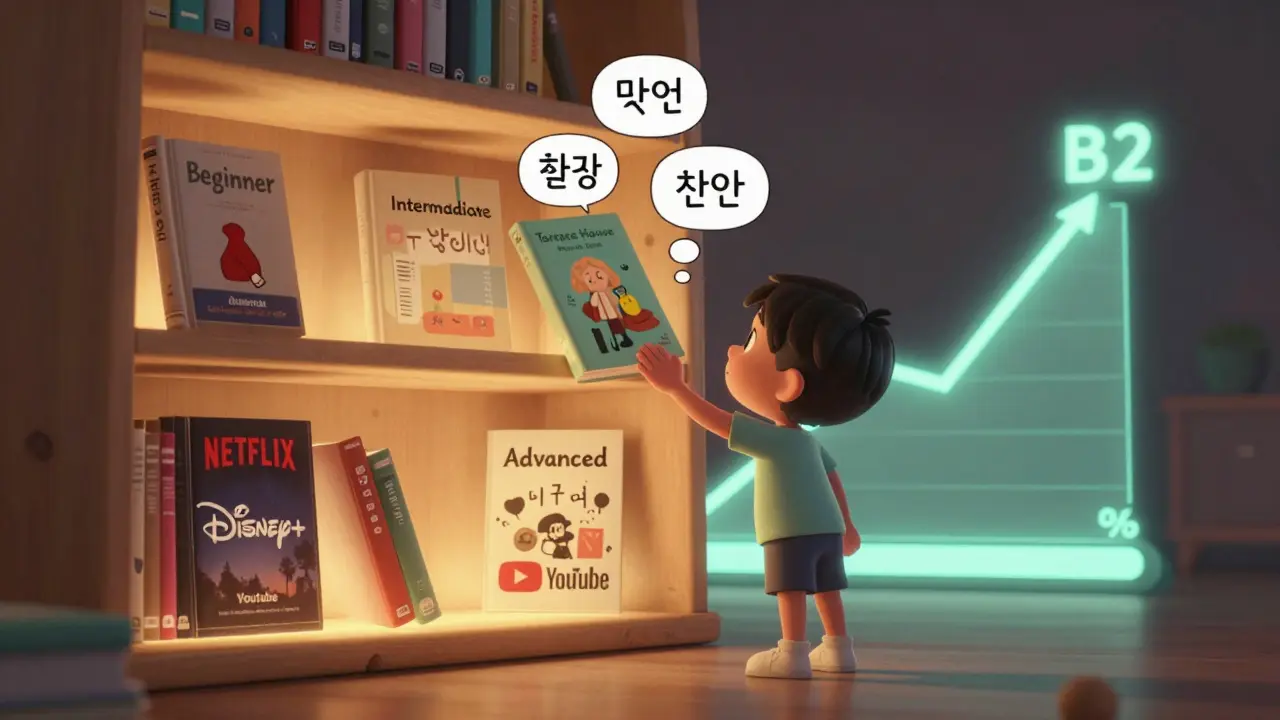
Pro tip: Don’t turn subtitles off too soon. Even intermediate learners benefit from them. A 2024 study by the University of Tokyo found that learners who kept subtitles on until reaching B2 level retained 60% more vocabulary than those who removed them at A2.

Use Technology to Boost Retention
Watching alone isn’t enough. You need active engagement. Use apps like Language Reactor (Chrome extension) or FluentU. They let you pause any show, click any word, and see its definition, pronunciation, and example sentences. You can save words to flashcards and review them later. One learner using Language Reactor to study Korean reported learning 150 new words in two weeks just from watching Crash Landing on You. Try this method: Watch a 10-minute scene. Pause every time you hear a new word. Write it down. Look it up. Say it out loud. Rewatch that same 10 minutes without subtitles. Can you catch the words you learned? If yes, you’ve made progress.Choose Content That Matches Your Level
Not every show is created equal for learners.- Beginners: Kids’ shows like Peppa Pig (in French or German) or Bluey (in Spanish). Simple vocabulary, slow speech, clear pronunciation.
- Intermediate: Sitcoms like Call My Agent! (French), Dark (German), or Money Heist (Spanish). Conversational, everyday phrases, repeatable dialogue.
- Advanced: Documentaries, news programs, or dramas with fast dialogue. Try Planet Earth in Japanese or The Crown in French. You’ll hear formal speech, idioms, and nuanced intonation.
Avoid action movies with heavy sound effects and unclear dialogue. You need to hear the words clearly. A slow-paced drama with clear enunciation beats a loud superhero film every time.
Track Your Progress Like a Pro
You won’t improve if you don’t measure it. Keep a simple log:- What show did you watch?
- What language were the subtitles?
- How many new words did you learn?
- Did you understand the scene without subtitles after watching?
After 30 days, look back. You’ll see patterns. Maybe you picked up 80 new phrases from Spanish dramas. Maybe you finally understand how Italians use ma instead of però. That’s real fluency-built scene by scene.
Common Mistakes to Avoid
Most people fail at this method because they make the same three mistakes:- Switching languages too often. Don’t bounce between English, Spanish, and French on the same show. Stick to one target language per session.
- Waiting to be fluent. You don’t need to understand everything. Even catching 30% of a conversation is progress. Focus on patterns, not perfection.
- Passive watching. If you’re scrolling on your phone while the show plays, you’re not learning. Sit down. Focus. Treat it like a lesson, not background noise.
One learner told me she gave up after two weeks because she didn’t understand anything. Then she switched to Friends in German. She laughed at the jokes. She recognized words like Freund and Arbeit. She kept going. Six months later, she passed her B1 German exam.
What to Watch Next
Here are five shows that work great for different languages:- Spanish: La Casa de Papel (Money Heist) - fast-paced, clear dialogue, lots of slang.
- French: Emily in Paris - exaggerated but full of everyday phrases and accents.
- German: Das Boot (2018 series) - slow, dramatic, perfect for listening practice.
- Japanese: Terrace House - real conversations, slow pace, no aggressive editing.
- Korean: Extraordinary Attorney Woo - clean pronunciation, legal terminology, emotional context helps memory.
Don’t wait for the perfect show. Start with something you already like. Love crime dramas? Watch True Detective in Italian. Into romance? Try a Turkish series with Turkish subtitles. Passion beats perfection every time.
Should I use subtitles in my native language or the target language?
Start with subtitles in the language you’re learning. English subtitles help you follow the story, but they don’t build your language skills. Target-language subtitles connect what you hear to what you read, which is how real language acquisition happens. Save native-language subtitles for when you’re stuck or need a quick check.
Is dubbing helpful for learning a language?
Yes-but only at the right stage. Dubbing helps beginners understand plot and emotion. Once you’re comfortable with the story, switch to the original audio with native subtitles. Comparing the dub with the original helps you notice how meaning changes across languages, which builds deeper understanding.
How long should I watch each day to see results?
As little as 20 minutes a day works if you’re focused. The key isn’t time-it’s consistency. Watching 30 minutes every day for a month gives you more progress than three hours once a week. Repetition and exposure matter more than marathon sessions.
Can I learn a language just by watching Netflix?
You can build strong listening and vocabulary skills this way, but you won’t become fluent without speaking and writing practice. Streaming is the best way to train your ear and absorb grammar naturally. But to speak confidently, you’ll still need to practice forming sentences, maybe with a tutor or language app. Think of streaming as your daily immersion-not your entire curriculum.
What if I don’t understand anything at first?
That’s normal. Even advanced learners start with 20% comprehension. Focus on catching familiar words, gestures, tone, and context. Don’t try to translate every sentence. Over time, your brain will start filling in gaps. After a few weeks, you’ll realize you understood more than you thought.