
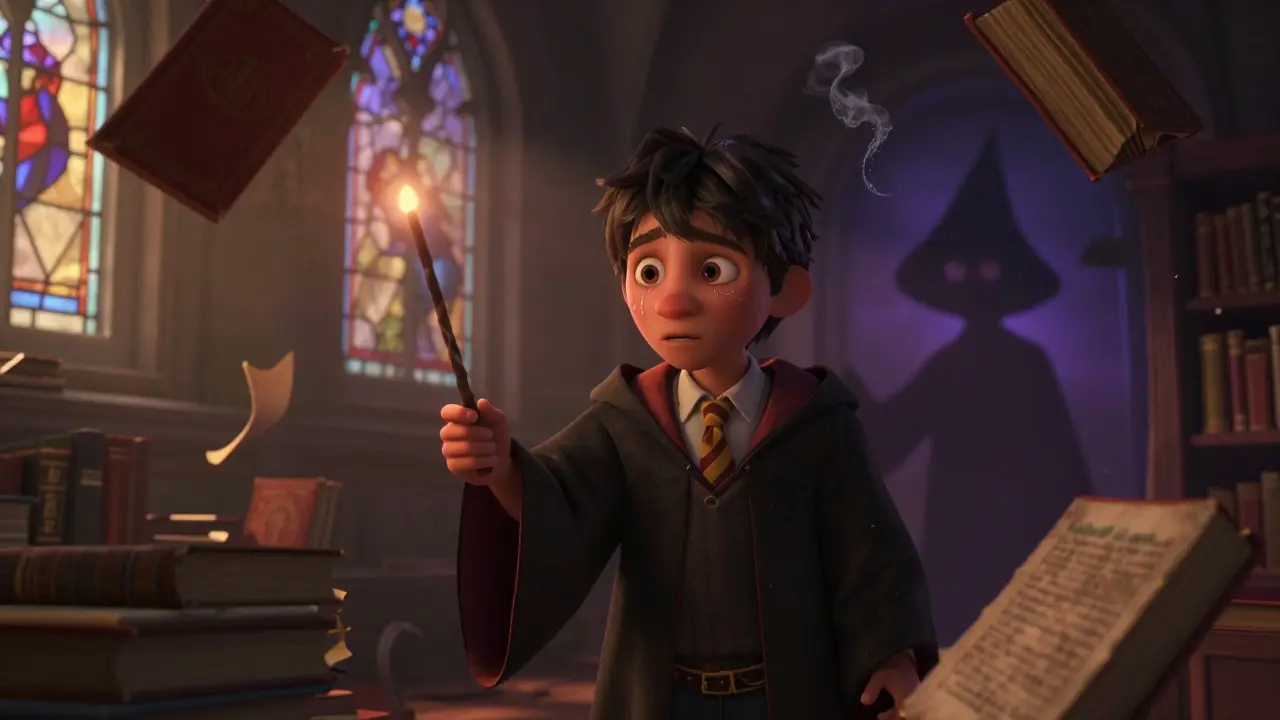
When you watch a wizard cast a spell that turns an army to stone, or a young hero summon a storm with a whispered word, you’re not just seeing cool effects. You’re watching a system at work. The best fantasy films don’t just throw magic around for show-they build rules, set costs, and use spectacle to make the impossible feel real. And that’s what separates a memorable fantasy world from a flashy mess.
Why Magic Needs Rules
Think about magic in Harry Potter. It’s everywhere: wands, spells, enchanted objects. But it’s never random. You can’t just wish for a million galleons. You need to say the right words, wave the wand just so, and sometimes, you still fail. That’s because magic in good fantasy has limits. No magic system works if it’s a free pass to solve every problem. If the hero can snap their fingers and undo any disaster, where’s the tension? Where’s the story?
Take The Lord of the Rings. Gandalf can’t bring back the dead. He can’t destroy Sauron with a single spell. He’s powerful, yes-but he’s bound by ancient laws. The One Ring corrupts. The elves fade. Magic isn’t a tool-it’s a force with consequences. That’s why the audience believes it. We don’t need to know every incantation. We just need to know that magic costs something.
The Hidden Price of Magic
Every spell, every enchantment, every magical artifact has a price. And the best fantasy films make you feel it.
In Pan’s Labyrinth, the faun demands a deadly task. The magic isn’t just about fantasy creatures-it’s tied to sacrifice. In Doctor Strange, using magic drains the user’s energy. Overuse leads to physical collapse. In Howl’s Moving Castle, magic twists the user’s body and soul. The more you use it, the less human you become.
Compare that to a movie like Conan the Barbarian, where magic is just a plot device. A villain casts a spell, the hero defeats him, and no one pays the price. It feels hollow. Why? Because there’s no cost. No risk. No consequence.
When magic has a cost, it becomes meaningful. It could be blood, memory, time, sanity, or even life itself. In Maleficent, the title character loses her wings to betray love-and later, regains them only through sacrifice. That’s not just visual spectacle. That’s emotional weight.
Spectacle Without Substance Is Just Noise
Let’s be honest: magic looks amazing on screen. Fireballs. Flying castles. Giant dragons made of smoke. Studios spend millions on these effects because they draw crowds. But spectacle alone doesn’t hold a story together.
The Chronicles of Narnia (2005) had dragons, talking beasts, and epic battles. But the magic felt arbitrary. Aslan appeared when needed. The White Witch’s power came from nowhere. No rules. No cost. The audience didn’t care because we never understood how the magic worked-or why it mattered.
Now look at The Witcher (Netflix, 2019). Geralt’s signs aren’t just flashy lights. They require focus. They drain stamina. Casting one too many in a fight leaves him vulnerable. The magic is tied to his biology, his training, his exhaustion. You see the strain on his face. You feel the risk. That’s spectacle with substance.
Same with Stranger Things. The Upside Down isn’t just a dark dimension. It’s connected to a child’s trauma, a government experiment, and a psychic link. The magic isn’t random-it’s rooted in character and consequence.
How Magic Shapes the World
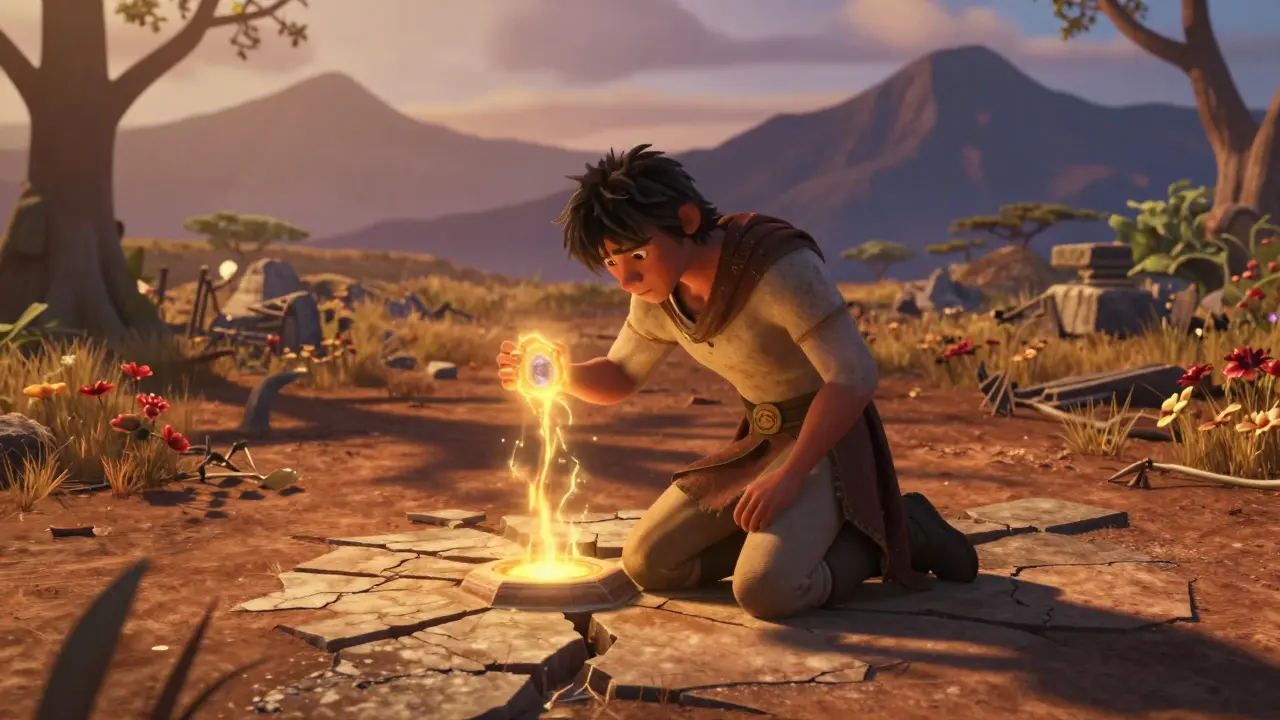
Good magic doesn’t just affect characters-it shapes entire societies.
In His Dark Materials, magic is tied to daemons, the soul made visible. That changes how people live, how they raise children, how they view death. Magic isn’t a side effect-it’s woven into the culture.
In The Dark Crystal, magic is tied to balance. The world crumbles when the crystal breaks. The magic isn’t controlled by wizards-it’s a natural force, like gravity. That makes the stakes feel bigger.
Compare that to Aladdin (1992). The genie grants wishes, but the world doesn’t change. The magic is a joke. The rules? None. The cost? None. The result? A fun ride, but not a world you believe in.
When magic shapes laws, religion, economy, or class structure, it becomes real. In Game of Thrones, the magic of the Others is feared because it’s unknown. It’s not a tool-it’s an existential threat. That fear drives politics, war, and survival.
What Makes Magic Feel Real?
There are three things every fantasy film needs to make magic feel grounded:
- Consistency-If a spell works once, it should work the same way next time. No deus ex machina.
- Cost-Magic must take something from the user. Energy, memory, relationships, life.
- Consequence-Magic changes the world. It doesn’t just solve problems-it creates new ones.
These aren’t just writing rules. They’re emotional ones. The audience doesn’t care about the spell’s name. They care about what it costs the hero. Did they lose a friend? Their voice? Their future? That’s what sticks with you.
Why Some Magic Systems Fail
Not all magic is created equal. Some films try to be flashy and forget the rules.
The Sorcerer’s Apprentice (2010) had Nicolas Cage as a wizard, a floating car, and a magic battle in New York. But the magic had no rules. It was just visual noise. No cost. No logic. No consequence. You walk away wondering why you cared.
Same with The Last Airbender (2010). The bending styles looked cool, but the rules were muddy. Why could Aang only use one element at a time? Why did the Avatar State exist? No one explained it. The audience didn’t believe it because the system didn’t make sense.
Bad magic feels like a cheat. Good magic feels like a truth.
What Makes Magic Last
The magic that stays with you isn’t the biggest explosion or the flashiest spell. It’s the quiet moment when a character pays the price.
In Practical Magic, the aunts use magic to protect each other-but they’re cursed to lose the men they love. That’s not spectacle. That’s sorrow. That’s truth.
In Howl’s Moving Castle, Sophie turns old because of a curse. She doesn’t fight to break it. She learns to live with it. That’s not magic as power. That’s magic as transformation.
When magic is tied to emotion, identity, or loss, it stops being a special effect. It becomes a mirror. We don’t watch magic to escape reality. We watch it to understand it.
The best fantasy films don’t ask you to believe in magic. They ask you to believe in the people who use it.