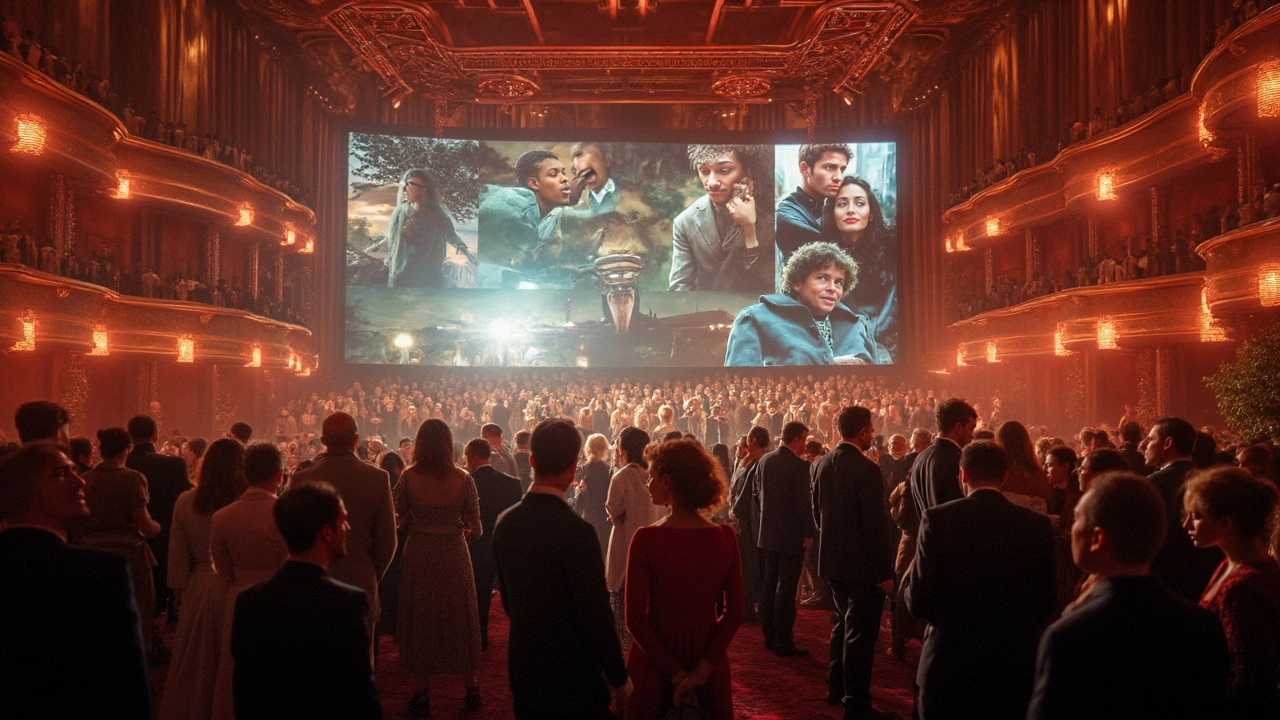

Think about the last time a movie made your heart race. Was it the chase scene? The explosion? Or was it the music-exactly synced to every cut, every punch, every breath-that made you feel it in your bones?
Music doesn’t just accompany film. It drives it. Especially in montage sequences, where time collapses and emotion builds. A great edit feels inevitable-not because of the visuals, but because the music told your brain when to jump.
The Cut Isn’t Just a Transition-It’s a Beat
In film editing, a cut is more than switching from one shot to another. It’s a punctuation mark. A pause. A punch. And music gives it rhythm.
Take the opening of Goodfellas. Henry Hill walks through the nightclub, camera gliding behind him. The music? “Layla” by Derek and the Dominos. The beat doesn’t just play-it leads. Every step Henry takes, every door he passes, every glance he gives is locked to the snare. The edit doesn’t cut because the shot is over. It cuts because the music demands it.
This isn’t coincidence. Editors and composers work together from day one. The temp track isn’t just a placeholder. It’s a blueprint. When an editor says, “I need this cut to land on the downbeat,” they’re not being poetic. They’re following a rule that’s been used since the silent era.
Montage: Where Music Becomes the Editor
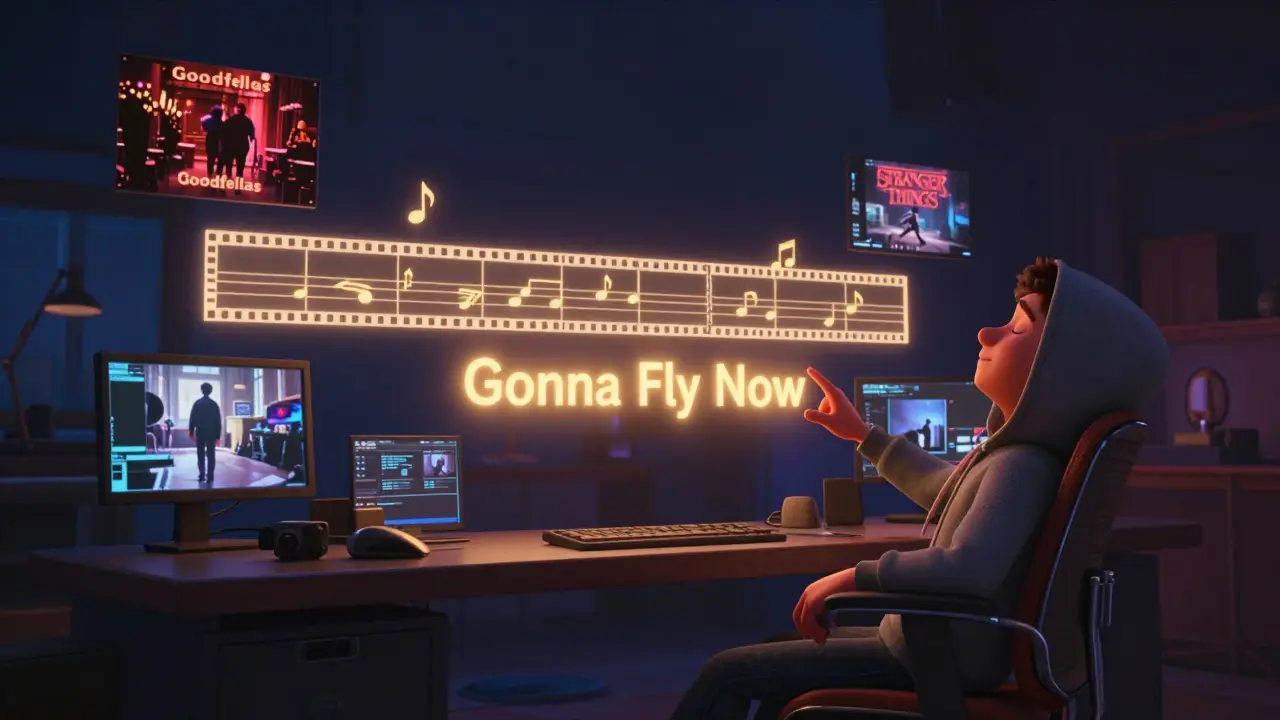
Montage sequences are where music takes control. Think of Rocky training. The clock ticks. The weights clank. The camera pans. But what makes you believe he’s becoming something more? The music-“Gonna Fly Now”-doesn’t just support the visuals. It is the story.
Each cut in that montage is timed to a chord change. A lift. A jump. A stumble. The music doesn’t wait for the edit. It calls the shot. The editor’s job becomes less about choosing which clip to use, and more about matching the rhythm of the music.
That’s why you can’t just slap any song onto a montage. It has to have a pulse. A clear, repeatable beat. A 4/4 time signature. A steady tempo. Think “Running Up That Hill” in Stranger Things-every cut aligns with the kick drum. Even the slow-motion shots are timed to the swell of the strings.
Modern editors use waveform displays in software like Adobe Premiere or Avid Media Composer. They zoom in. They snap cuts to peaks and valleys in the audio. It’s not magic. It’s math. But the magic happens when that math feels emotional.
Temp Tracks Are the Secret Language Between Composer and Editor
Before a composer writes a single note, the editor is already working with a temp track. It might be a song from another movie. A classical piece. Even a pop hit. The composer doesn’t just hear the temp track-they study it.
They ask: How many beats per minute? Where are the climaxes? How long does the tension build before the release? The temp track tells them the emotional arc of the scene.
John Williams didn’t just write the theme for Jaws. He studied the temp track the editor used: a simple two-note pulse. Williams took that idea and turned it into something primal. The music didn’t just match the shark’s approach-it made you feel the inevitability of the attack.
That’s why temp tracks are never just placeholders. They’re the first draft of the film’s heartbeat.
The Science of Sync: Why 120 BPM Is the Sweet Spot
There’s a reason so many iconic montages use a tempo around 120 beats per minute. It’s not random. It’s biological.
Studies in neuroscience show that humans naturally sync to rhythms between 100 and 130 BPM. That’s the range of a resting heart rate during mild exertion. When you hear music in that zone, your body responds without thinking. Your pulse quickens. Your muscles tense. Your brain expects movement.
That’s why the training montage in Rocky works. 118 BPM. Just under 120. It’s fast enough to feel urgent, slow enough to let you see every drop of sweat. The music doesn’t just tell you to feel inspired-it makes your body feel like you’re running alongside Rocky.
Compare that to the opening of Drive. The synthwave beat is 108 BPM. Slower. More hypnotic. The cuts are longer. The tension builds differently. The music doesn’t rush you. It pulls you in. The rhythm controls the pace of the entire film.
Music doesn’t just match the edit. It dictates the edit’s speed, weight, and emotional impact.
When the Music Breaks the Cut-And Why It Works
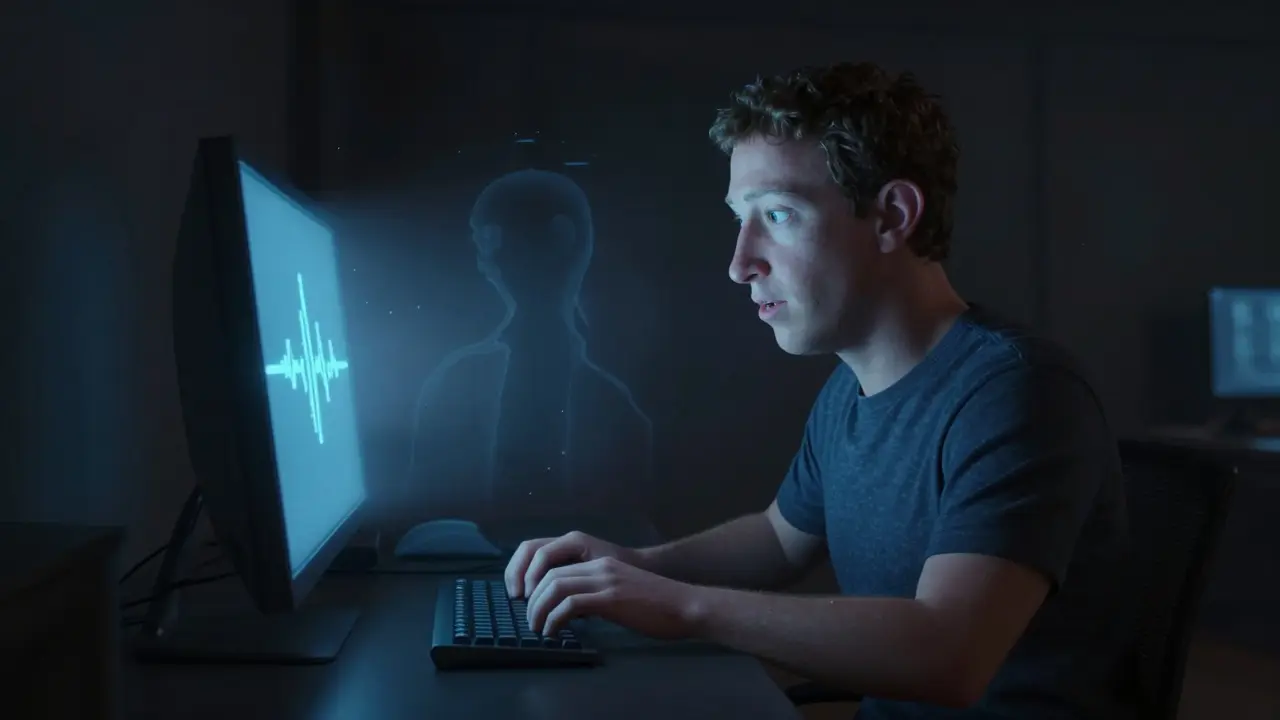
There’s a moment in The Social Network where the music stops. Just for a second. As Mark Zuckerberg types his final line, the score by Trent Reznor and Atticus Ross cuts out. The silence lasts two seconds. Then-click-the screen locks.
No music. No swell. Just the sound of a keyboard and the silence after.
That’s the power of breaking rhythm. When music always drives the cut, silence becomes the most powerful edit of all.
It’s the same in No Country for Old Men. The Coen brothers use almost no score. When the music does appear-like the faint, distant hum during the gas station scene-it’s so rare that it feels like a violation of nature. The silence makes every footstep, every breath, every gunshot feel heavier.
Breaking the rhythm isn’t an accident. It’s a calculated risk. And when it works, it changes how you remember the scene.
Editing Without Music Is Like Walking Blindfolded
Try this: Watch your favorite action scene without sound. Now watch it with sound. The difference isn’t just louder or more dramatic. It’s structural.
Without music, cuts feel arbitrary. Shots drag. Pacing feels off. The story loses momentum.
Music gives editors a hidden grid. A timeline that doesn’t show up in the timeline. It’s the invisible ruler that tells you when to cut, when to hold, when to rush, when to pause.
That’s why film schools teach editing with music from day one. You don’t learn to cut by watching how long a shot lasts. You learn by listening to how long a beat lasts.
Some editors swear by working with headphones on. Others play music loud enough to feel it in their chest. But they all agree: if the rhythm doesn’t feel right, the edit won’t either.
Modern Tools, Ancient Rules
Today’s editors have AI tools that auto-sync cuts to audio. They can analyze a track and suggest edit points. But the best ones still listen. They still tap their foot. They still feel the music in their bones.
Because no algorithm can replicate the instinct that comes from years of watching how a single note can make a viewer hold their breath.
The tools change. The technology evolves. But the rule stays the same: music doesn’t follow the edit. The edit follows the music.
That’s why the most powerful scenes in film aren’t the ones with the biggest explosions. They’re the ones where the music and the cut become one. Where you don’t remember what you saw. You remember how it made you feel.
And that feeling? It was never in the picture. It was in the sound.