
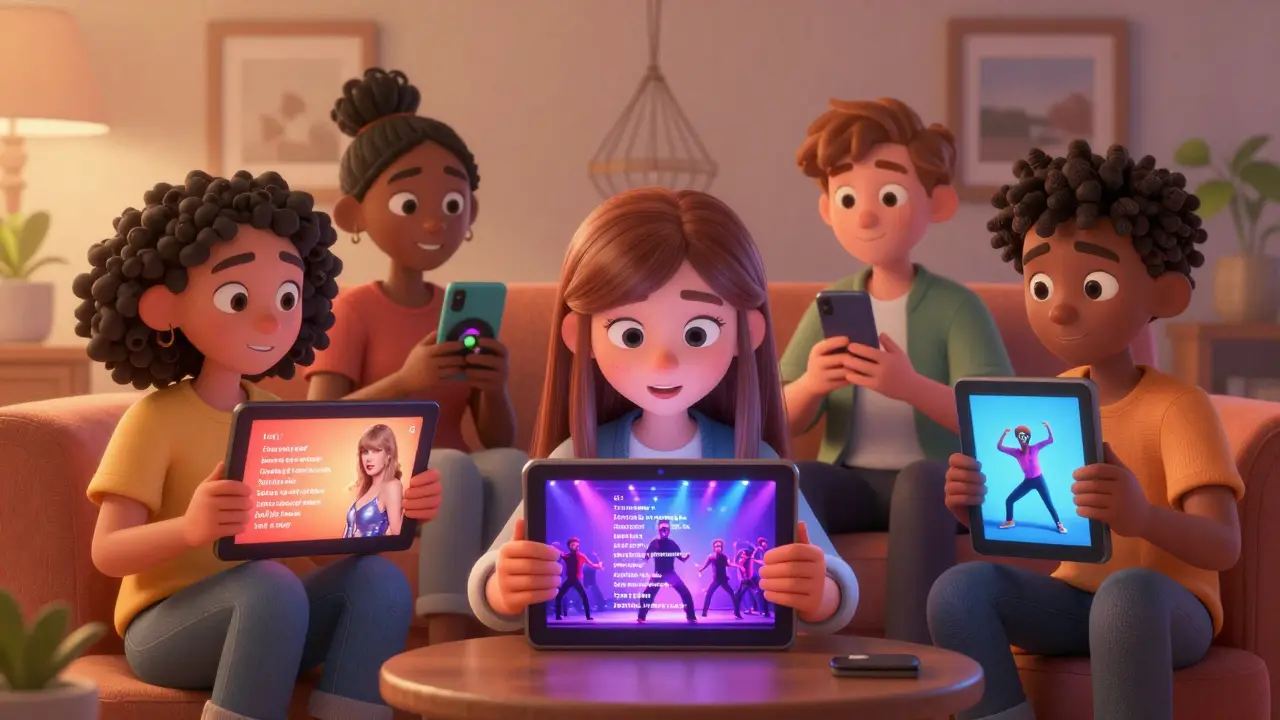
Why music videos still matter in 2026
It’s 2026, and you’d think music videos would’ve faded into nostalgia. But they haven’t. In fact, over 60% of Gen Z listeners watch music videos at least once a week-not just for the song, but for the visuals, the choreography, the storytelling. Music isn’t just heard anymore. It’s seen. And that’s why choosing the right platform for music video streaming isn’t just about convenience-it’s about how you experience music.
Two names dominate: YouTube Music and Spotify. One started as a video giant that added music. The other began as a pure audio streamer that’s been scrambling to catch up. But which one actually gives you the best music video experience today?
YouTube Music: The original video library
YouTube Music doesn’t just have music videos-it has everything tied to a song. Official uploads from labels? Check. Live performances from festivals? Done. Fan-made lyric videos, cover versions, remixes, even concert bootlegs? All there.
That’s because YouTube Music pulls from the full YouTube ecosystem. If someone uploaded a video of a song, chances are it’s searchable on YouTube Music. This means you can find rare live versions of songs that never made it to Spotify. Want to hear Taylor Swift’s 2010 acoustic version of "Love Story" from a small theater in Nashville? It’s probably on YouTube Music. On Spotify? You’ll get the studio version and maybe a live recording from her Eras Tour-but only if the label approved it.
YouTube Music also lets you watch videos without an account. No sign-up needed to browse. And if you’re on a free plan, you still get music videos-unlike Spotify, which locks them behind Premium. That’s a big deal if you’re not ready to pay monthly.
Spotify: The audio-first platform trying to catch up
Spotify launched music videos in 2021, and they’ve been playing catch-up ever since. Their library is smaller, cleaner, and more curated. You won’t find random fan edits or shaky phone recordings here. You’ll find official videos, behind-the-scenes clips, and a few exclusive premieres.
Spotify’s advantage? Integration. Music videos show up right in your daily mix, your Discover Weekly, even in your recently played list. If you’re listening to a song and a video exists, Spotify will auto-play it on your phone screen when you unlock your device. It feels seamless-like the video was meant to be there.
But here’s the catch: You need Spotify Premium to watch any music video. Free users get zero video access. And even with Premium, the selection is limited. Big artists like Beyoncé or Ed Sheeran? Plenty of videos. Lesser-known indie bands? Good luck finding anything beyond the official upload.
Library size: YouTube wins by a landslide
YouTube Music has over 100 million music videos and audio tracks. Spotify has around 100 million tracks, but only about 15 million official music videos. That’s not even a quarter of what’s available on YouTube.
Why the gap? Labels and artists upload videos to YouTube first. Spotify gets licensed versions later-if they get them at all. Many artists, especially independent ones, don’t even submit videos to Spotify. They know YouTube is where the audience is.
On YouTube Music, you can search for "BTS live at Wembley 2022" and get five different versions. On Spotify? Maybe one official upload, if it’s there. If you care about depth, variety, and discovery, YouTube Music is the clear winner.
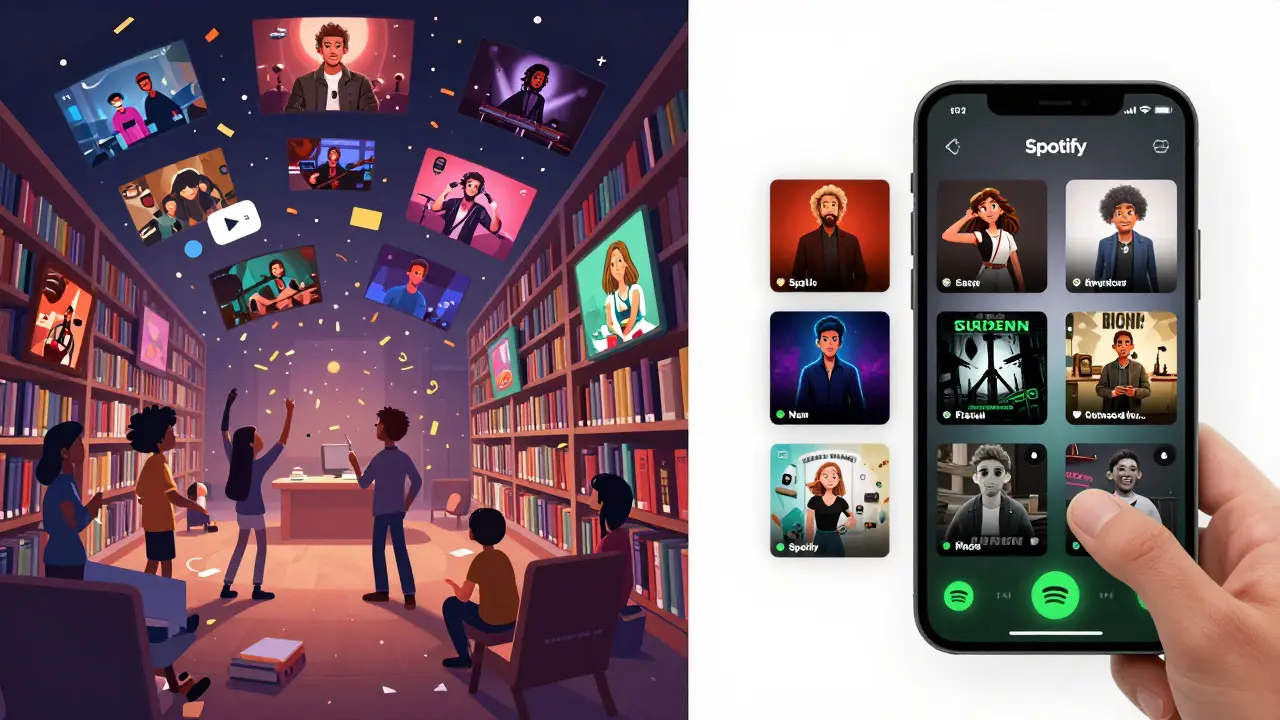
Discovery: Which platform helps you find new music?
YouTube Music is better at accidental discovery. Type in a song you like, and it’ll show you related covers, remixes, live versions, and even fan dance challenges. It’s chaotic, but that’s how you find hidden gems.
Spotify’s algorithm is smoother. It recommends songs based on your listening habits and adds music videos only when they match your taste. It’s less overwhelming, but also less surprising. You won’t stumble upon a 2008 underground hip-hop remix unless you’ve already listened to that artist ten times.
If you like to explore, YouTube Music feels like wandering through a giant record store where every shelf has something unexpected. Spotify feels like walking into a curated boutique-everything looks nice, but you already know what’s on the shelves.
Audio quality: It’s a tie
Both services offer the same audio quality for music videos: 256 kbps AAC on mobile, 320 kbps on desktop. No difference in sound. Neither supports lossless audio for videos yet, even though both claim to support it for audio-only tracks.
For most people, this doesn’t matter. Music videos are watched, not critically listened to. But if you’re an audiophile who watches videos on a high-end speaker setup, you’ll notice neither platform delivers true high-res video audio. That’s a gap both need to close.
Interface and usability
YouTube Music’s interface is cluttered. It looks like YouTube. You’ll see ads on the free plan, recommended videos from unrelated channels, and sometimes the same song appears five times in different formats. It’s not elegant, but it’s functional.
Spotify’s app is clean. Minimalist. Music videos appear in a dedicated tab called "Videos," and they’re easy to browse. But it’s too clean. Sometimes it feels like you’re missing out. You can’t easily search for fan edits or live sessions. Everything is sanitized.
YouTube Music gives you raw access. Spotify gives you polish. Pick based on whether you want exploration or simplicity.
Offline viewing
Both allow you to download music videos for offline viewing-but only if you’re on Premium. Free users can’t save anything.
YouTube Music lets you download videos in up to 1080p. Spotify only offers 720p. If you’re watching on a tablet or big screen later, YouTube’s higher resolution matters. You’ll notice the difference in close-ups, lighting, and detail.
Price and value
YouTube Music Premium: €10.99/month. Includes access to YouTube Premium (no ads on YouTube, background play, downloads). You’re paying for two services in one.
Spotify Premium: €10.99/month. Just music and videos. No video ad-free YouTube access.
At the same price, YouTube Music gives you more. If you already use YouTube a lot, it’s a no-brainer. If you only care about music and don’t care about YouTube’s video content, Spotify’s cleaner interface might be worth it.
There’s also a family plan: Both offer €16.99/month for up to six people. Same deal.
Who should use which?
- Choose YouTube Music if: You want the widest selection of music videos, including live shows, covers, and fan content. You’re okay with a cluttered interface. You use YouTube often. You want to watch videos for free.
- Choose Spotify if: You want a clean, simple experience. You mostly listen to mainstream artists. You don’t care about rare or fan-made videos. You value seamless integration with your playlists and daily mixes.
There’s no wrong choice. But if you want to truly experience music as it’s meant to be seen-raw, unfiltered, and full of life-YouTube Music is the only platform that lets you do that.
Frequently Asked Questions
Can I watch music videos for free on Spotify?
No. Spotify only allows music video playback for Premium subscribers. Free users can’t watch any music videos, even if they’re available on the platform.
Does YouTube Music have exclusive music videos?
Yes. Some artists release exclusive live performances, behind-the-scenes footage, or early premieres only on YouTube Music. These are often tied to album releases or tours and won’t appear on Spotify.
Can I download music videos for offline viewing?
Yes, but only with a Premium subscription on either platform. YouTube Music allows downloads up to 1080p, while Spotify caps at 720p.
Which service has better recommendations for new music videos?
YouTube Music wins for discovery. It recommends videos based on what’s trending, fan uploads, and related content-even obscure covers or live versions. Spotify’s recommendations are more polished but narrower, sticking to official releases and mainstream artists.
Is YouTube Music better for indie artists?
Absolutely. Indie artists upload their videos directly to YouTube, and those show up on YouTube Music. Spotify requires distribution through a label or aggregator, which many independent musicians skip. You’ll find far more indie content on YouTube Music.