
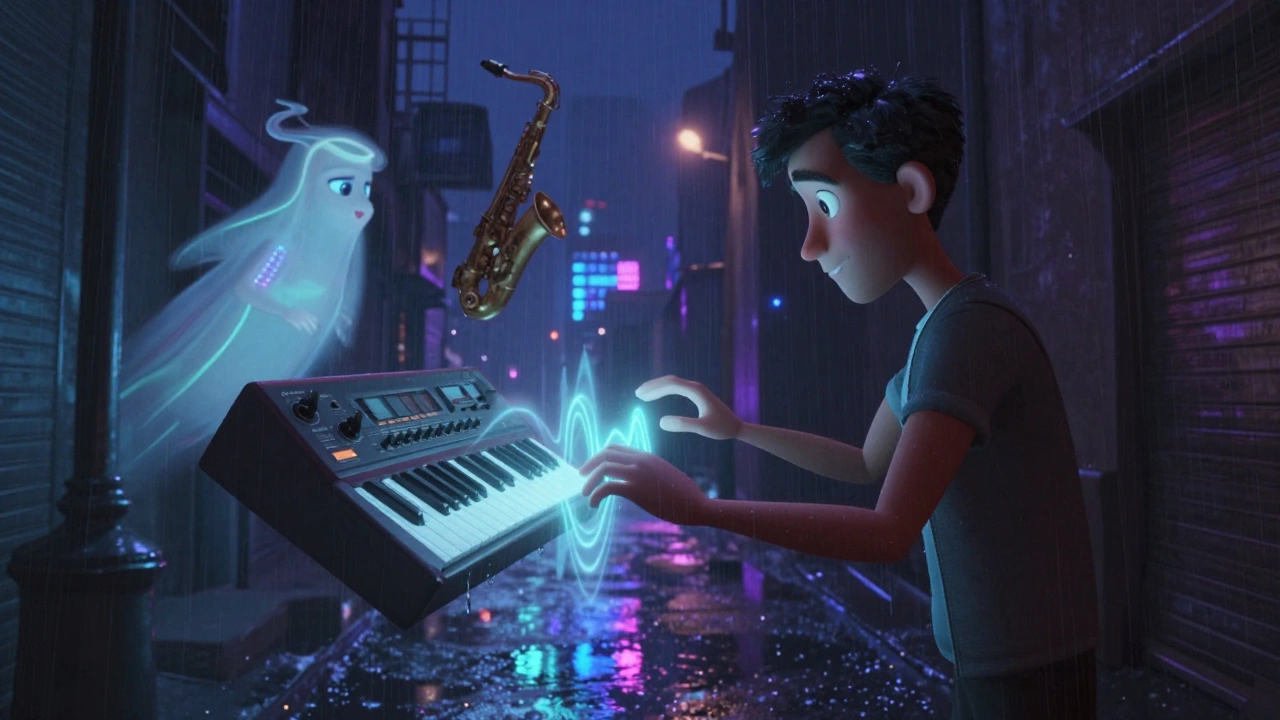
Synth scores didn’t just accompany movies-they became the emotional backbone of entire genres. In the late 1970s, when analog synths were still rare in cinema, Vangelis turned a sci-fi epic into a haunting, celestial experience with Blade Runner. Decades later, Trent Reznor and Atticus Ross took that same cold, mechanical beauty and twisted it into the anxious heartbeat of The Social Network. These weren’t just soundtracks. They were sonic world-building. And they changed how we feel when we watch films.
Before Synths: Orchestras Rule the Screen
For most of the 20th century, film music meant strings, brass, and woodwinds. John Williams gave us soaring themes. Bernard Herrmann gave us shrieking violins. These were emotional, human, and grand. But by the 1980s, something shifted. Technology got cheaper. Synthesizers like the Yamaha CS-80 and the Roland TB-303 moved out of prog rock studios and into film scoring rooms. Directors started asking: What if the music didn’t sound like a live orchestra-but like the future itself?
Vangelis didn’t just use synths. He made them breathe. On Blade Runner, he layered analog pads, gated reverb, and custom-modified keyboards to create a sound that felt both alien and deeply lonely. There were no violins in the rain-soaked streets of Los Angeles 2019. Just a slow, pulsing bassline and a lone saxophone crying over a synth choir. That score didn’t just support the film-it became its soul.
Vangelis: The Poet of the Machine
Vangelis didn’t come from Hollywood. He was a Greek artist who recorded in his home studio, often using just one or two synths at a time. His process was intuitive. He’d play for hours, record everything, then edit the magic out of the chaos. No click tracks. No MIDI. Just raw performance. That’s why his music feels alive, even when it’s made of circuits.
On Chariots of Fire, he used a Yamaha CS-80 to craft that iconic, running melody. It’s simple-four notes, repeating-but the way the filter sweeps and the delay trails make it feel like motion itself. The score won an Oscar. Critics called it nostalgic. But it wasn’t looking back. It was projecting forward: a human spirit powered by electronic rhythm.
His work on Blade Runner was even more radical. No traditional leitmotifs. No character themes. Just atmosphere. The score didn’t tell you how to feel-it made you feel it without asking. That’s why, 40 years later, people still play it in art galleries, meditation apps, and late-night drives. It’s not background music. It’s emotional architecture.
Trent Reznor: The Noise That Became Emotion
When David Fincher hired Trent Reznor for The Social Network, no one expected a Nine Inch Nails frontman to score a movie about college kids and lawsuits. But Fincher knew something: Zuckerberg’s rise wasn’t a drama of speeches. It was a story of isolation, obsession, and cold digital power. Reznor and Ross didn’t write melodies. They built sonic environments.
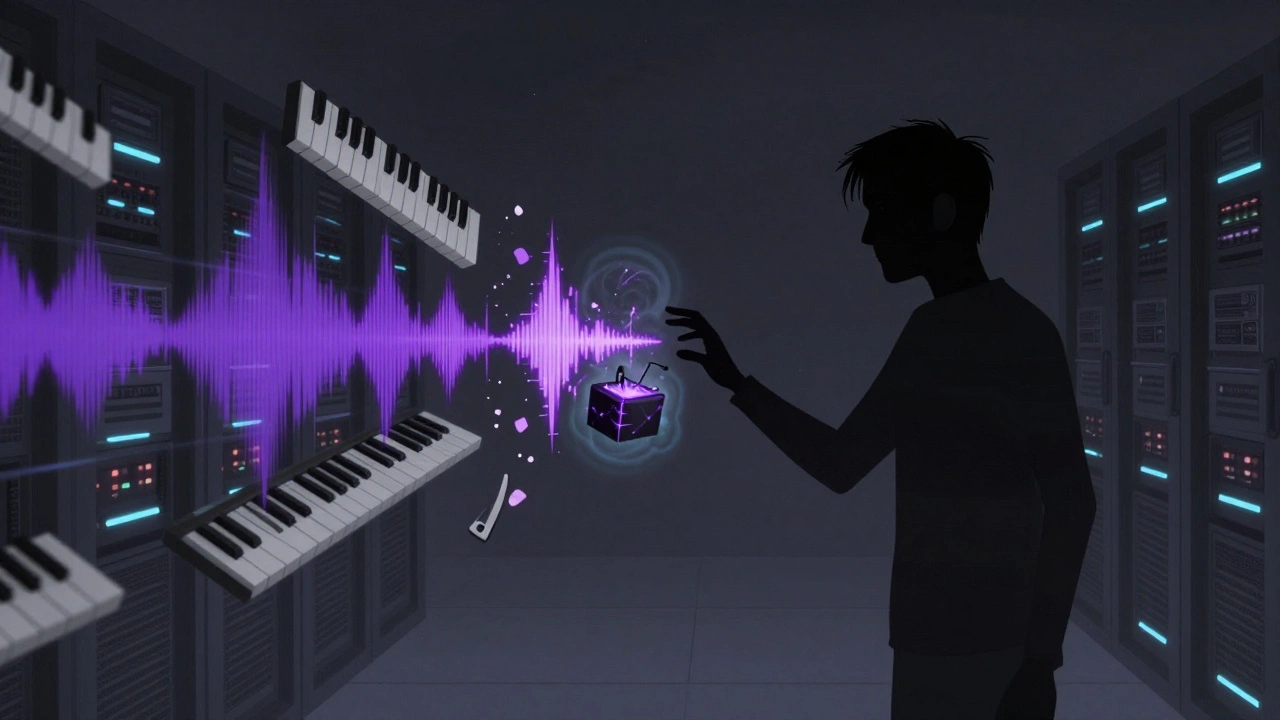
They used distorted synths, reversed piano loops, and glitchy percussion to create a score that sounded like a server farm humming in an empty room. The main theme-built from a single repeating piano phrase layered with industrial noise-feels like a heartbeat caught in a firewall. It’s beautiful and unsettling at the same time. And it won them an Oscar, a Grammy, and a new way of thinking about film music.
Reznor didn’t just use synths-he weaponized them. On Gone Girl, he turned a children’s music box into a nightmare. On The Girl with the Dragon Tattoo, he made silence feel louder than any orchestra. His scores don’t swell. They creep. They don’t announce emotion-they trap you inside it.
Why These Two Changed Everything
Vangelis and Reznor didn’t just use the same tools. They shared the same philosophy: Emotion doesn’t need strings. It needs texture.
Vangelis proved that synths could carry the weight of human longing. Reznor proved they could carry the weight of modern alienation. Together, they killed the myth that electronic music was cold or soulless. They showed that machines could feel more than humans sometimes.
Before them, film scores were either orchestral or cheesy. After them? A new language emerged. Think of Stranger Things-its whole identity is built on the Vangelis-Reznor lineage. Think of Blade Runner 2049-Hans Zimmer and Benjamin Wallfisch didn’t just honor Vangelis. They expanded his vocabulary with modern modular synths and granular processing.
Even pop films now use synth textures to signal inner states. In Everything Everywhere All At Once, the emotional climax isn’t underscored by strings. It’s a pulsing, warm analog pad-direct descendant of Vangelis’ CS-80. In Oppenheimer, Ludwig Göransson uses glitchy synths to mirror nuclear anxiety-Reznor’s ghost in the machine.
How to Spot Their Influence Today
You don’t need to know the gear to hear the legacy. Here’s how to tell if a modern score owes something to Vangelis or Reznor:
- Is there a slow, repeating synth motif that feels hypnotic, not catchy?
- Does the music feel like a place, not a melody?
- Are there layers of noise-static, distortion, reversed sounds-that aren’t mistakes but intentional texture?
- Is the score quiet most of the time, but hits you harder because of it?
- Does it make you feel alone, even in a crowded room?
If you answer yes to most of these, you’re listening to the Vangelis-Reznor lineage. It’s not about the number of synths. It’s about how they’re used-to build mood, not music.
The Tools That Made It Possible
Vangelis worked with gear most people couldn’t afford in 1982: the Yamaha CS-80, the Polymoog, the EMS Synthi A. He’d spend weeks tweaking one sound. Reznor used software-Logic Pro, Native Instruments, and custom-built plugins-but his process was just as obsessive. He’d record 50 versions of a single note, then pick the one that felt most broken.
Today, you don’t need $10,000 synths. A laptop, a $100 MIDI controller, and free plugins like Vital or Serum can get you close. But the real lesson isn’t about gear. It’s about patience. Vangelis didn’t rush. Reznor didn’t settle. They let the music breathe.
Why This Matters Now
Music is everywhere. Background playlists, TikTok hooks, AI-generated tracks. But the best film scores still make us stop scrolling. They make us feel something we can’t name. Vangelis and Reznor taught us that the most powerful sounds aren’t the loudest. They’re the ones that linger-like the echo of a synth fading into rain.
When you watch a movie today and the music doesn’t tell you how to feel-but makes you feel it anyway-that’s their legacy. Not in the notes. In the silence between them.
What makes a synth score different from an orchestral one?
A synth score uses electronic sounds-oscillators, filters, and digital effects-to create mood, while an orchestral score relies on acoustic instruments like strings, brass, and woodwinds. Synth scores often focus on atmosphere, texture, and repetition, whereas orchestral scores tend to emphasize melody, harmony, and dynamic swells. Synths can mimic emotion without human performers, creating a colder, more mechanical feeling that fits sci-fi, thrillers, and modern isolation themes.
Why did Vangelis avoid using click tracks?
Vangelis believed rhythm should come from feeling, not machines. By avoiding click tracks, he let his performances breathe with natural human imperfections-slight delays, tempo shifts, and expressive phrasing. This gave his music an organic, almost living quality, even when made with synths. It’s why his scores feel timeless-they don’t sound programmed. They sound played.
Did Trent Reznor have any musical training?
Reznor is mostly self-taught. He learned piano as a kid but never studied classical music formally. His skill came from experimentation-recording hours of noise, reversing tapes, layering distortion, and editing until something felt emotionally true. He doesn’t read sheet music. He hears emotion in waveform shapes and knows how to make a synth sound like regret.
Can modern composers still use analog synths today?
Yes, and many do. Artists like Hans Zimmer, Benjamin Wallfisch, and even Ludwig Göransson use vintage analog gear alongside digital tools. Modular synths from companies like Moog and Buchla are back in demand. But it’s not about nostalgia-it’s about sound. Analog synths have unpredictable warmth, subtle drift, and harmonic richness that digital emulations still struggle to replicate perfectly.
What’s the biggest misconception about synth scores?
That they’re easy to make. People think pressing a button on a synth equals a great score. But Vangelis spent weeks on one sound. Reznor recorded hundreds of takes for a single note. The real skill isn’t in the gear-it’s in knowing when to leave silence, how to shape tension, and how to make a machine feel human.