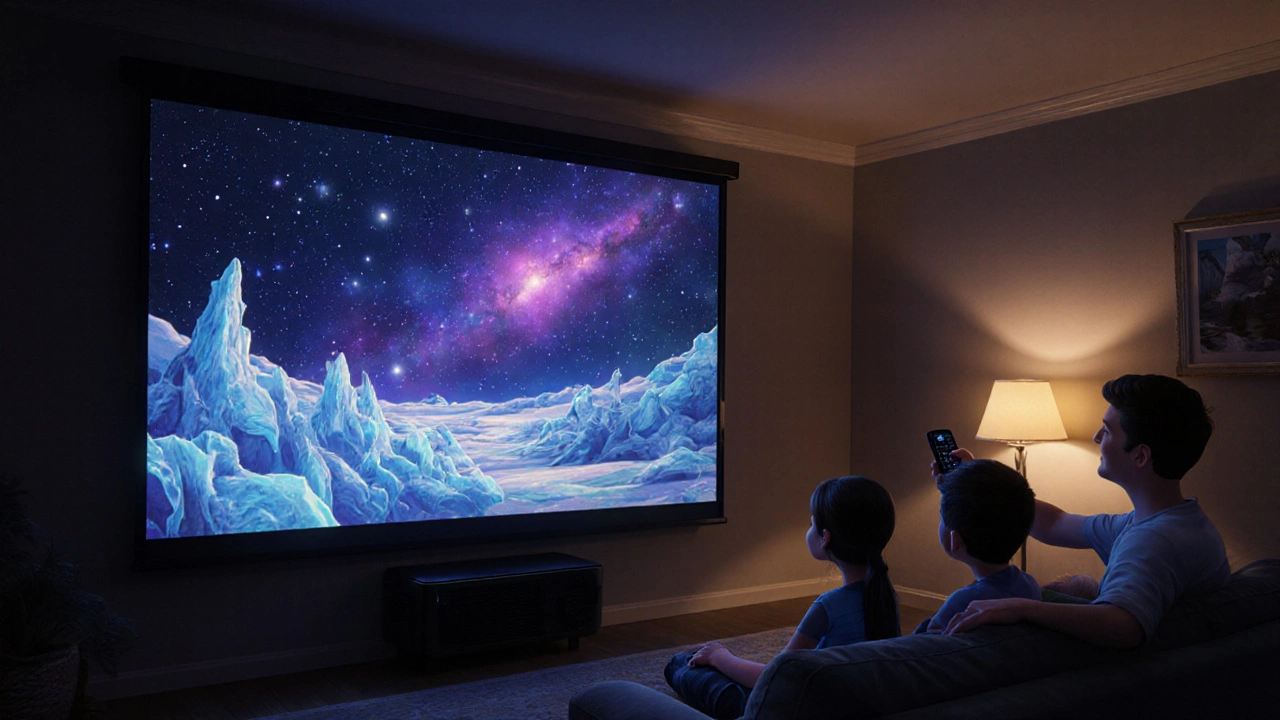
Streaming HDR Brightness: How Display Tech Affects Your Viewing Experience
When you stream content in HDR brightness, a display technology that expands the range of light and color beyond standard dynamic range. Also known as High Dynamic Range, it’s not just a marketing buzzword—it’s the difference between seeing a sunset as a flat orange blur and feeling the warmth of real light fading across the sky. Most people think HDR means ‘brighter,’ but that’s only half the story. True HDR is about contrast: the deepest blacks, the brightest whites, and every shade in between that makes a scene feel alive. If your screen can’t handle that range, you’re not watching HDR—you’re watching a washed-out copy of it.
What makes HDR brightness work isn’t just the signal from your streaming service—it’s the whole chain. Your TV, your streaming device, even the room lighting all play a part. A 4K Netflix stream with HDR metadata means nothing if your TV only hits 300 nits of peak brightness. Compare that to a high-end OLED hitting 1,000 nits or more, and suddenly you see why some films feel like they’re leaping off the screen. It’s not magic. It’s physics. And it’s why two people watching the same movie on different devices can have completely different experiences. Related to this are HDR display, the hardware that renders HDR content with proper light control and color accuracy, and streaming quality, how well a platform delivers video data without compression that kills detail. These aren’t separate issues—they’re layers of the same puzzle.
And here’s the catch: not all HDR is created equal. HDR10, Dolby Vision, HLG—they all work differently. Some are open standards. Some require licensing. Some dynamically adjust brightness frame by frame. Others just crank up the numbers and call it done. Your streaming device matters too. A Roku or Apple TV with HDR support won’t help if your TV can’t respond. Even your internet speed can silently undermine HDR if the stream drops to 10 Mbps just to keep up. You don’t need the most expensive gear, but you do need to understand what your setup can actually do. The posts below dive into real-world examples—from overheating streaming boxes that throttle performance, to how lighting and display tech shape how we experience stories on screen. You’ll find guides on what to look for when buying a new TV, why some HDR movies look flat on certain devices, and how to get the most out of what you already own. No fluff. Just what works.
Fix dim HDR on your 4K projector with these simple settings. Learn how to boost brightness, choose the right mode, and avoid common mistakes that ruin streaming quality.
View More