
Imagine spending hundreds of millions on a movie only to lose money. It sounds crazy, but this happens more often than you think. Some films become infamous for their spectacular failures at the box office. In this article, we'll look at the biggest box office bombs, why they happened, and what the film industry learned from them.
What Exactly Is a Box Office Bomb?
A box office bomb is a movie that fails to recoup its production and marketing costs. The rule of thumb is simple: a film needs to earn at least twice its production budget to break even. Why? Because studios spend heavily on advertising and distribution. For example, a $100 million movie usually needs to make $200 million or more worldwide to cover all expenses. Anything less means a financial loss for the studio. It's not just about the money-these failures can also damage reputations, delay projects, and even lead to studio restructuring.
Top 5 Biggest Box Office Bombs Ever
Let's look at some of the most notorious examples:
John Carter (2012)
John Carter is a 2012 science fiction film directed by Andrew Stanton. The film had a production budget of $263 million and earned only $284 million worldwide, resulting in a significant financial loss for Disney.
Why did it flop? Disney's marketing was confusing. Trailers made it look like a typical sci-fi adventure, but the film was actually based on Edgar Rice Burroughs' classic novels. Audiences didn't connect with the story, and critics panned it. Worse, it opened against "The Avengers" and "The Hunger Games," which dominated the box office. The result? A $200 million loss for Disney.
Cutthroat Island (1995)
Cutthroat Island is a 1995 pirate adventure film starring Geena Davis. With a budget of $100 million, it only grossed $10 million worldwide.
This movie had everything going wrong. Production delays pushed the budget up. The studio changed directors multiple times, leading to a messy final product. Critics called it "boring" and "unoriginal." Worse, it was released during a summer dominated by "Batman Forever" and "Apollo 13," which overshadowed it completely. The studio never recovered from this loss.
The Lone Ranger (2013)
The Lone Ranger is a 2013 Western film starring Johnny Depp. Despite a $225 million budget, it earned just $260 million globally.
Marketing missteps were a big problem. Trailers focused too much on the Tonto character (Depp), making it seem like a comedy. But the film was a serious Western. Audiences stayed away, and critics called it "slow" and "confusing." The studio lost over $150 million on this project. It's considered one of the biggest flops in modern cinema.
Batman & Robin (1997)
Batman & Robin is the fourth film in the Batman series. With a $120 million budget, it made $238 million worldwide.
Though it made money, it was still a loss because of marketing costs. The film was criticized for being too campy and childish. Critics called it "a disaster" and "a joke." Fans of the series were disappointed. The studio canceled plans for a fifth Batman film, and the franchise was rebooted later. This movie is often cited as the reason the Batman series was put on hold for years.
Justice League (2017)
Justice League is a DC superhero film directed by Zack Snyder (later edited by Joss Whedon). It cost $300 million to produce but only earned $657 million globally.
The film had a troubled production. Snyder left due to a family tragedy, and Whedon had to reshoot scenes. The final product was criticized for being disjointed. Critics said it lacked the depth of Marvel's movies. Despite the earnings, the studio lost money because of the high costs. This failure led to DC rethinking its entire strategy, shifting to more standalone films.
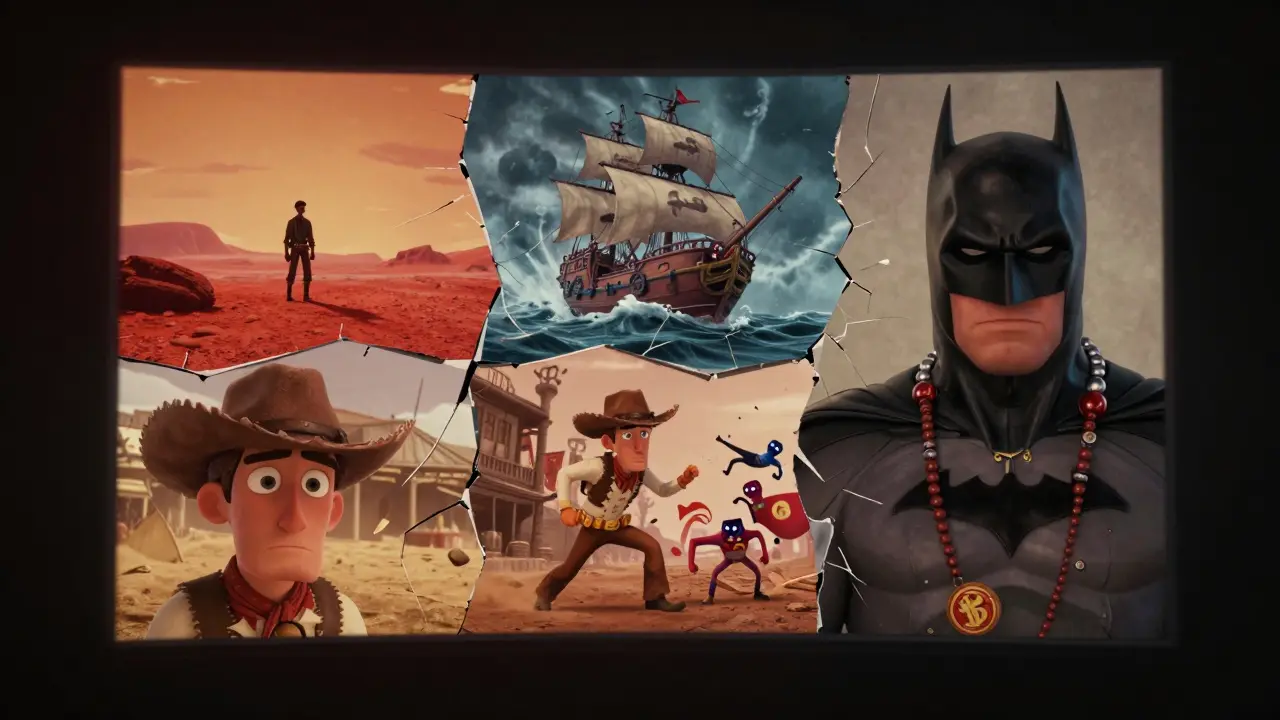
Why Did These Movies Fail?
Each bomb has its own story, but common themes emerge. Here's what typically goes wrong:
- Marketing Misfires: Trailers that misrepresent the movie (like The Lone Ranger) confuse audiences.
- High Production Costs: Budgets that balloon out of control (like John Carter at $263 million) make breaking even nearly impossible.
- Timing and Competition: Releasing during a blockbuster season (e.g., against The Avengers or The Hunger Games) can doom a film.
- Critical Reception: Bad reviews scare off audiences. Batman & Robin was called "the worst superhero movie ever" by many critics.
- Production Chaos: Director changes, reshoots, and studio interference (like in Justice League) lead to messy final products.
What Happens After a Bomb Hits?
Studios don't just give up after a bomb. They adapt. For example, after John Carter flopped, Disney shifted focus to other franchises like Marvel and Star Wars. They learned to be more careful with big-budget projects. Similarly, Warner Bros. restructured its DC films after Justice League failed, moving toward more character-driven stories.
Some bombs even become cult classics. Cutthroat Island is now a nostalgic favorite among pirate movie fans. But for most studios, the immediate reaction is to cut losses and move on.

Lessons Learned for Filmmakers
These failures taught the industry valuable lessons:
- Know Your Audience: The Lone Ranger failed because it didn't connect with modern viewers. Filmmakers now test audience reactions early.
- Control Budgets: Studios now set stricter budget limits. John Carter's $263 million budget was unsustainable for a sci-fi film.
- Timing Matters: Avoid releasing during peak competition. Studios now schedule releases strategically.
- Embrace Creativity: Batman & Robin was too campy. Today's films balance fun with substance.
These lessons help studios avoid repeating the same mistakes. But as history shows, even with careful planning, some bombs still happen.
Frequently Asked Questions
Can a box office bomb become a cult classic?
Yes, absolutely. Some films like Cutthroat Island and Blade Runner initially flopped but gained popularity through home video and streaming. Today, they're considered classics. However, this is rare-most bombs stay forgotten.
How do studios calculate whether a movie is a bomb?
It's not just about the box office number. Studios consider the total cost: production budget plus marketing (often 50-100% of the production budget). For example, a $100 million movie needs to make $200 million or more to break even. If it falls short, it's a bomb. The John Carter example shows how even a gross of $284 million can be a loss when marketing costs are included.
What's the biggest box office bomb ever?
The title often goes to Waterworld (1995), with a $175 million budget and $264 million gross. However, considering marketing costs, it lost around $100 million. More recent contenders include Justice League and The Mummy (2017), which lost over $100 million each.
Do box office bombs affect future projects?
Yes, they can. After Batman & Robin flopped, Warner Bros. canceled plans for more Batman films and rebooted the franchise years later. Similarly, Justice League's failure led DC to abandon its shared universe plan and focus on solo films. Studios often become more cautious after major flops.
Are there any movies that were bombs but later became successful?
A few examples exist. Blade Runner (1982) was a box office bomb but later became a cult classic through home video. Similarly, Star Wars (1977) was almost canceled during production but became a massive hit. However, these are exceptions-most bombs don't recover.