
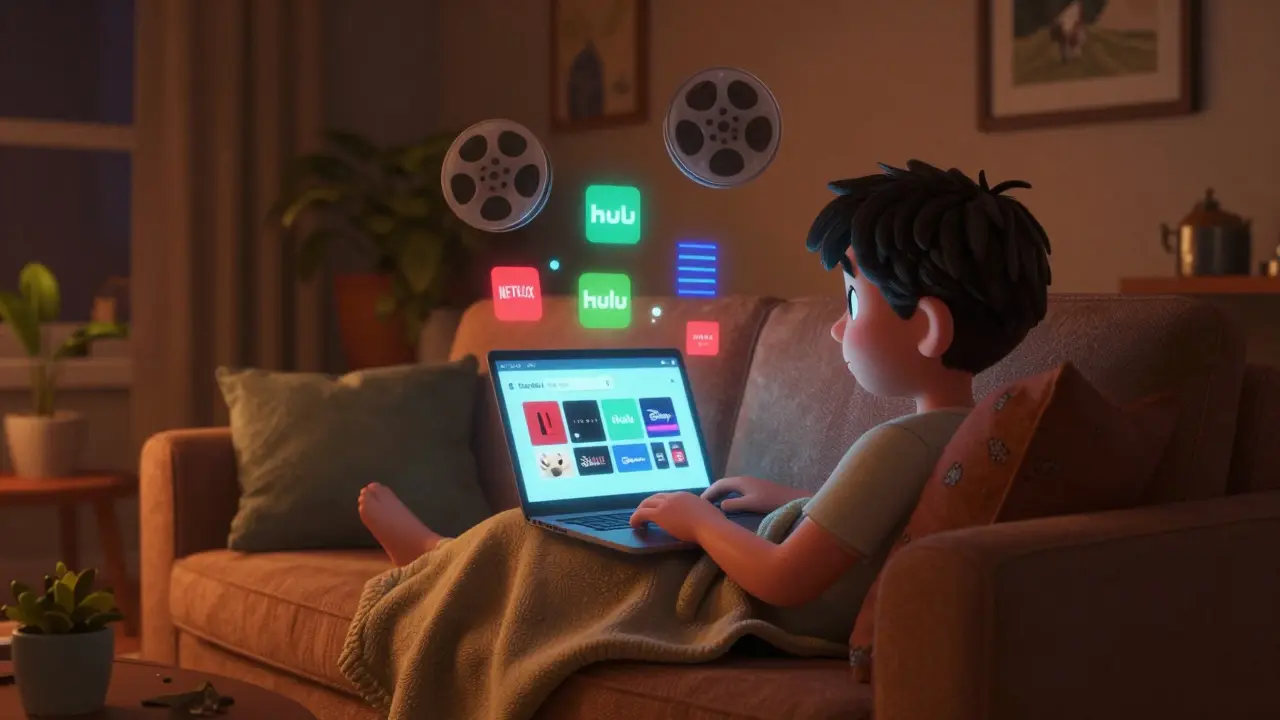
Ever finish a movie and immediately forget what you thought of it? Or scroll through your Netflix queue wondering if you’ve already seen that indie film from 2018? You’re not alone. Millions of people watch movies and TV shows, but only a few actually keep track of what they’ve seen-and why they liked or hated it. That’s where Trakt and Letterboxd come in. They turn passive watching into an organized, personal film journal.
What Trakt and Letterboxd Do (And Why They’re Different)
Trakt and Letterboxd both help you track what you’ve watched, rate it, and write reviews. But they feel totally different. Trakt is built for the data-driven viewer. It syncs with your streaming apps-Netflix, Hulu, Disney+, Apple TV+, and more-and auto-logs what you watch. No need to remember to click "seen." It just knows. If you start a show on your Roku and finish it on your phone, Trakt updates across all devices. It also tracks how long you’ve spent watching, your watchlist, and even your viewing streaks.
Letterboxd, on the other hand, is social, visual, and built for film lovers who write. It looks like a diary you’d keep in a notebook. You rate movies with stars, write short thoughts, tag them with moods like "moody," "dark comedy," or "slow burn," and even add screenshots. It’s less about automation and more about expression. You can follow friends, see what they’re watching, and get recommendations based on their tastes-not algorithms.
Trakt is your personal stats dashboard. Letterboxd is your public film diary. Many people use both.
How Trakt Automatically Tracks Your Watching
Trakt’s magic is in its integrations. Connect your streaming accounts, and it pulls your watch history directly from the source. It works with over 20 platforms, including Amazon Prime Video, HBO Max, and even Plex. Once connected, every time you finish an episode or movie, Trakt marks it as watched-no manual input needed.
It doesn’t just log titles. It tracks:
- Exact time you started and finished
- How many episodes you watched in one sitting
- Season and episode numbers for series
- Whether you skipped credits or paused mid-episode
For example, if you binged all of Severance over a weekend, Trakt records it as 9 episodes watched in 12 hours. You can then look back and say, "I watched 72 hours of TV last month." That kind of data helps you understand your habits. Are you watching more documentaries lately? Did you drop half the shows you started? Trakt shows you patterns you didn’t know you had.
How Letterboxd Turns Watching Into a Personal Archive
Letterboxd doesn’t auto-log anything. You have to add movies manually. But that’s the point. It forces you to pause and think. After watching The Power of the Dog, you open the app, search for it, give it 4.5 stars, and type: "Quiet terror. Benedict Cumberbatch’s eyes did more acting than the script." That note? It’s yours forever.
Letterboxd lets you create custom lists: "Movies That Made Me Cry," "Films Shot in Ireland," "Watched While Sick in 2025." You can tag movies with moods, genres, or even colors. A movie tagged "blue," "lonely," and "slow" becomes part of a visual language only you (and your followers) understand.
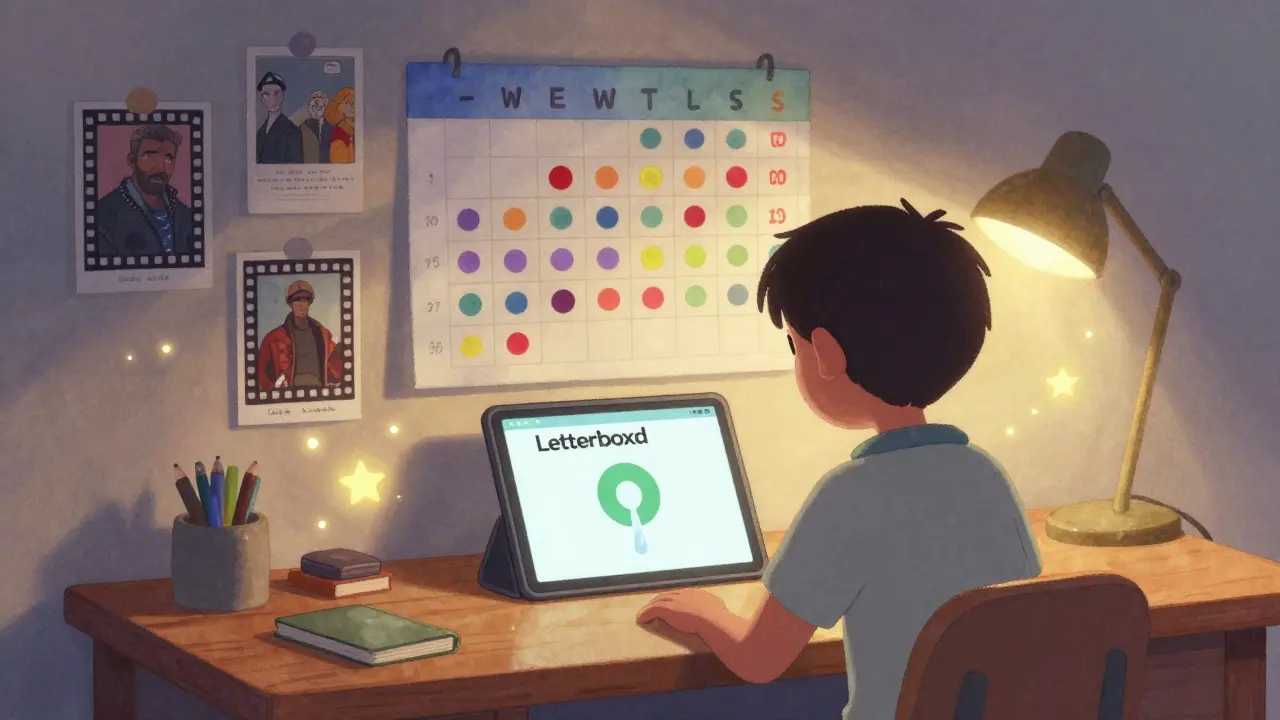
It also has a simple but powerful feature: the "Watched" calendar. Every day you mark a movie, it shows up as a dot on a grid. Over time, your calendar fills up like a pixel art portrait of your film life. In 2025, you watched 147 movies. In 2024, it was 89. Why the jump? Maybe you retired. Maybe you started watching with your partner. The calendar doesn’t tell you why-but it shows you that something changed.
Why You Should Use Both (And How to Sync Them)
Trakt handles the heavy lifting. Letterboxd handles the heart. Together, they give you the full picture.
Here’s how to set them up:
- Sign up for Trakt and connect your streaming services.
- Sign up for Letterboxd and create a profile.
- In Trakt, go to Settings → Connect → Letterboxd, and authorize the link.
- Now, every time Trakt logs a movie, it auto-posts to your Letterboxd diary with your rating.
That means you get the convenience of auto-tracking without losing the joy of writing. You don’t have to do double work. Trakt records the facts. Letterboxd records the feelings.
One user in Dublin told me he uses this setup to remember films he watched with his late father. "I’d never remember the titles," he said. "But now, when I scroll through my 2025 list, I see Amélie-watched March 14, 2025. Rated 5 stars. Wrote: ‘He laughed at the same part every time.’ That’s not data. That’s memory."
What You Can’t Do With Either (And How to Work Around It)
Neither Trakt nor Letterboxd can track physical media. If you rent a Blu-ray from a local shop or borrow a DVD from a friend, it won’t show up. You have to add it manually. But that’s easy. Just search the title, add it, and rate it.
They also don’t track what you skipped. If you fast-forwarded through the whole third season of Succession, Trakt still logs it as "watched." Letterboxd won’t know you hated it. That’s on you to note in your review.
And neither app tells you where to stream something right now. Trakt shows you your watchlist. Letterboxd shows you what’s trending. But neither says, "This is on Netflix this week." For that, you still need JustWatch or Reelgood. Use them alongside Trakt and Letterboxd for the full experience.
Real Benefits Beyond the Stats
People think tracking your viewing is just for nerds. But it’s not. It’s for anyone who’s ever said:
- "I’ve seen that movie before, right?"
- "What was that film with the red coat?"
- "I liked it, but I can’t remember why."
Trakt and Letterboxd fix that. They give you back control over your time. Instead of letting streaming services decide what you watch next, you decide based on your own history. You start noticing patterns: you always pick thrillers after work. You avoid comedies when you’re tired. You rewatch Amélie every winter.
It also helps you discover films you forgot you loved. Last year, I found a 2018 documentary I’d rated 5 stars on Letterboxd. I’d completely forgotten it existed. I watched it again-and loved it even more.
And for those who write? Letterboxd becomes a quiet creative outlet. You don’t need to be a critic. A single sentence like "The ending made me cry in the car" is enough. It’s not about being perfect. It’s about being honest.
What’s Next for Your Watching Habits?
If you’ve ever felt overwhelmed by choice, or forgotten what you loved, Trakt and Letterboxd are your antidote. They don’t push content. They reflect you. They turn your screen time into something meaningful-not just another scroll.
Start today. Connect your accounts. Watch one movie. Rate it. Write one line. That’s all it takes. In a year, you’ll have a record of your tastes, your moods, your quiet moments with stories that moved you. And that’s more valuable than any algorithm ever could be.
Can Trakt and Letterboxd track what I watch on my smart TV?
Yes. Trakt syncs with most smart TV apps like Roku, Apple TV, and Android TV. Once you link your account in the Trakt app, it automatically logs what you watch-even if you’re using your TV remote. Letterboxd doesn’t auto-log, but you can manually add anything you watch on any device.
Is Letterboxd only for film snobs?
No. Letterboxd is used by everyone-from people who watch one movie a year to those who watch 300. You don’t need to write essays. A star rating and a single word like "boring" or "beautiful" is enough. The community is welcoming. Most posts are short, honest, and human.
Do I have to pay for Trakt or Letterboxd?
No. Both are completely free. Trakt offers a Pro version ($3/month) for extra features like custom watchlist layouts and ad removal. Letterboxd has no paid tier at all. You get everything-syncing, lists, reviews, calendars-for free.
Can I export my data from Trakt or Letterboxd?
Yes. Trakt lets you download your entire watch history as a CSV file. Letterboxd lets you export your profile as a JSON file. Both are useful if you want to back up your data or move to another service later.
Will Trakt track my kids’ viewing too?
Trakt doesn’t distinguish between users on the same device. If your child watches something on your account, it’ll log under your profile. To avoid this, create a separate Trakt account for your kids or log out of your streaming apps when they use the TV.
What if I stop using Trakt or Letterboxd? Can I delete my data?
Yes. Both platforms allow you to delete your account and all associated data permanently. Go to your account settings, find "Delete Account," and follow the steps. Your history will be erased from their servers within 30 days.