

Wes Anderson doesn’t make movies. He builds dioramas you can sit through.
His films don’t just look different-they feel like they were constructed by hand, frame by frame, with tweezers and a ruler. Every shot is balanced. Every prop is placed like a chess piece. Even the characters walk in perfect sync, as if choreographed by a clockmaker with a penchant for nostalgia. If you’ve ever paused a Wes Anderson movie just to stare at the wallpaper, you’re not alone. You’re witnessing the work of a filmmaker who treats symmetry not as a design choice, but as a storytelling language.
The Architecture of Control
Anderson’s films are built on precision. In The Grand Budapest Hotel, the hotel itself is a three-tiered cake of pastel colors, each level perfectly aligned. The camera doesn’t just follow characters-it glides along invisible rails, always centered, always level. Even when characters run, they run in straight lines. When they talk, they face each other dead-on. No awkward angles. No accidental motion blur. This isn’t laziness or a lack of creativity. It’s the opposite: an obsessive control over every element.
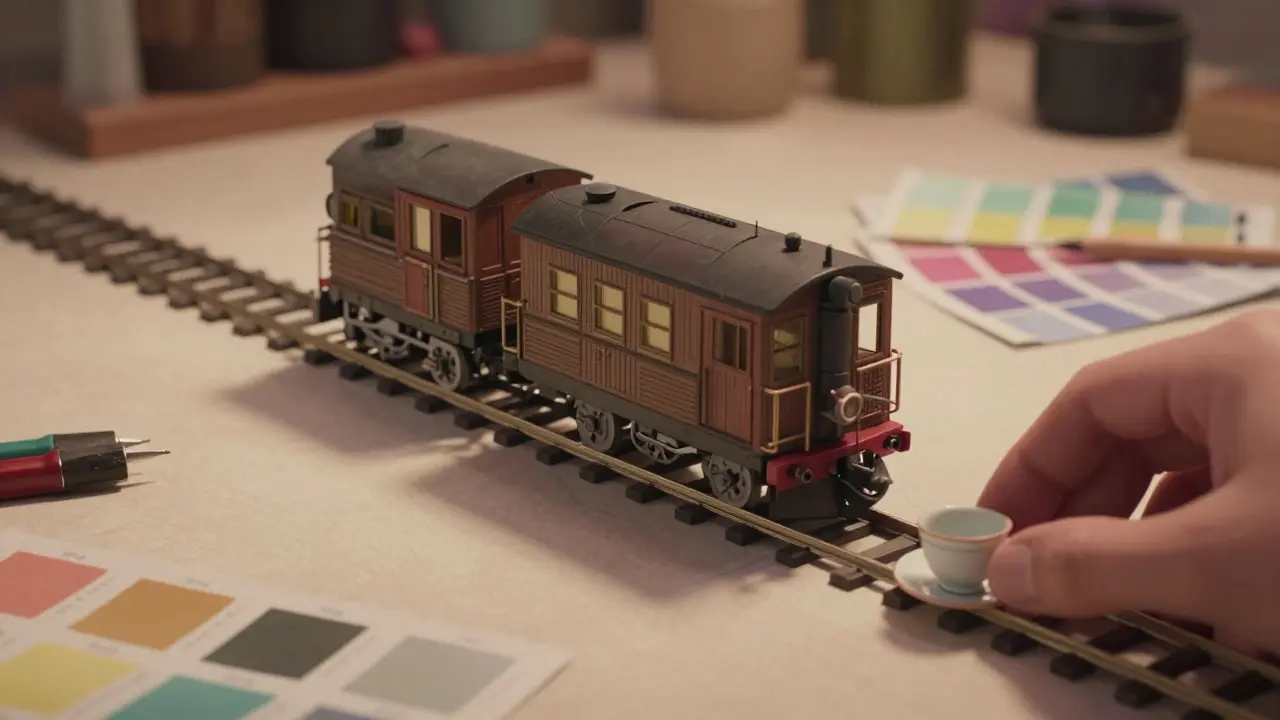
He doesn’t use CGI to create these worlds. He builds them. The hotel in The Grand Budapest Hotel was a real, miniature set, built in a studio in Germany. The train cars were scaled down, hand-painted, and moved by wires. The food in the scenes? Real. The uniforms? Sewn by tailors who studied 1930s European hotel staff attire. Anderson’s team once spent six weeks just designing the labels on a fictional jam company called Mendl’s. That’s not eccentricity. That’s devotion.
Why Symmetry? It’s Not Just Aesthetic
Symmetry in Anderson’s films isn’t decorative-it’s emotional. Think of the way characters in Rushmore or Isle of Dogs are framed in the center of the screen. It feels calm. But also lonely. Isolated. Like they’re trapped inside a snow globe you can’t shake.
When a character breaks symmetry-when they lean to one side, or the camera tilts-it’s intentional. In The Darjeeling Limited, when the three brothers finally stop pretending they’re okay, the camera pulls away from its rigid center. The world shifts. The silence after their breakdown is louder than any dialogue. Symmetry isn’t just a style. It’s a mirror for emotional repression.
Studies of visual perception show that humans process symmetrical images faster and find them more pleasing. Anderson knows this. He doesn’t just make things look pretty-he makes you feel safe. Then he shatters that safety with a sudden burst of grief, absurdity, or violence. That contrast is why his films stick with you. You’re not just watching a movie. You’re being gently manipulated into caring.
The Color Palette as Character
Anderson doesn’t just pick colors. He assigns them roles. In Amélie, the French film that inspired his early work, the world is warm, golden, and soft. In Anderson’s hands, colors become emotional anchors.
Look at The Life Aquatic with Steve Zissou. The blue of the ocean, the red of the team’s uniforms, the yellow of the submarine-it’s not random. Each hue carries meaning. Blue = isolation. Red = passion. Yellow = absurdity. The characters wear their emotions on their sleeves, literally. Even the lighting is calibrated. No harsh shadows. No deep blacks. Everything is softly lit, like a pastel painting caught in daylight.
His production designers don’t just choose paint swatches-they create mood boards with Pantone codes. For Fantastic Mr. Fox, they used 47 different shades of brown to distinguish between the fox’s fur, the soil, the wood, and the shadows. That’s not filmmaking. That’s taxonomy.
Who Is This Man, Really?
Wes Anderson isn’t just a director. He’s a curator of forgotten worlds. He resurrects the aesthetic of 1960s European cinema, 1970s American travel magazines, and 1980s board game boxes. His films feel like they were made in a parallel universe where time moves slower, and people still write letters by hand.
He grew up in Houston, Texas, the son of a lawyer and a painter. His father’s law books and his mother’s art supplies became his childhood playground. That duality-logic and creativity-is baked into his work. His scripts are tightly structured, almost mathematical. His visuals are wildly imaginative. He’s the only filmmaker who can make a scene about a man searching for a mythical sea creature feel like a meditation on loss.
He doesn’t use social media. He rarely gives interviews. He doesn’t chase trends. He works with the same crew, the same actors, the same composers. Bill Murray, Owen Wilson, Jason Schwartzman, Tilda Swinton-they’re not just cast members. They’re part of his extended family. Their performances aren’t acted. They’re inherited.

The Music That Holds It All Together
The music in Anderson’s films isn’t background noise. It’s the heartbeat.
He doesn’t hire composers to write original scores. He scours record stores for obscure 1960s pop, French chansons, and Eastern European folk tunes. The soundtrack to Rushmore is built around The Kinks and The Who. The Royal Tenenbaums leans on Nick Drake and Sonic Youth. Isle of Dogs features a haunting score by Alexandre Desplat that mimics the rhythm of a ticking metronome.
He uses music to tell you how to feel before the scene even begins. A sudden shift in the soundtrack-a harpsichord turning into a theremin-signals a character’s emotional collapse. You don’t need dialogue. The music tells you everything.
Why His Style Still Matters
In a world of algorithm-driven content, where every second is optimized for retention, Anderson’s films are stubbornly slow. They demand patience. They reward attention. You can’t binge them. You have to sit with them.
His influence is everywhere. TikTok creators mimic his camera movements. Instagram designers use his color palettes. Even fast-food chains have copied his symmetrical product layouts. But no one can replicate his soul.
He’s not trying to be cool. He’s not chasing awards. He’s building worlds that feel like home-even when they’re filled with talking dogs, failed inventors, and stolen museums. In a culture obsessed with chaos, he offers order. Not as a escape, but as an act of love.
Wes Anderson doesn’t make movies for the masses. He makes them for the quiet ones-the ones who notice the pattern in the wallpaper, who pause at the exact moment a teacup is placed just so, who feel a pang of nostalgia for a time that never existed. That’s why his films endure. Not because they’re perfect. But because they’re human. In the most precise way possible.
Why is Wes Anderson’s style so instantly recognizable?
His style comes from a combination of symmetrical framing, deliberate color palettes, stop-motion or miniaturized sets, and carefully curated soundtracks. These elements aren’t random-they’re repeated across every film, creating a visual language that’s consistent and deeply personal. You don’t need to see the title to know it’s his.
Does Wes Anderson direct all his own films?
Yes. He writes, directs, and often co-produces every feature film he’s released since Bottle Rocket in 1996. He also has heavy creative control over the production design, costumes, and editing. He’s one of the few modern directors who functions as a true auteur.
What films should I watch to understand his style?
Start with The Royal Tenenbaums (2001) for emotional depth and visual flair, The Grand Budapest Hotel (2014) for peak symmetry and color, and Isle of Dogs (2018) for stop-motion innovation. Rushmore (1998) is the best entry point for his early tone.
Is Wes Anderson’s work considered art house?
Yes, but with mainstream appeal. His films are funded independently and often screened at festivals like Cannes and Sundance, which places them in the art house tradition. Yet, they consistently earn box office success and critical acclaim, bridging the gap between niche and popular cinema.
How does Wes Anderson choose his actors?
He casts based on chemistry, not fame. Many of his regulars-Bill Murray, Owen Wilson, Jason Schwartzman-worked with him early in their careers. He values quiet intensity over showy performances. His actors often play emotionally reserved characters who reveal depth through subtle gestures, not monologues.