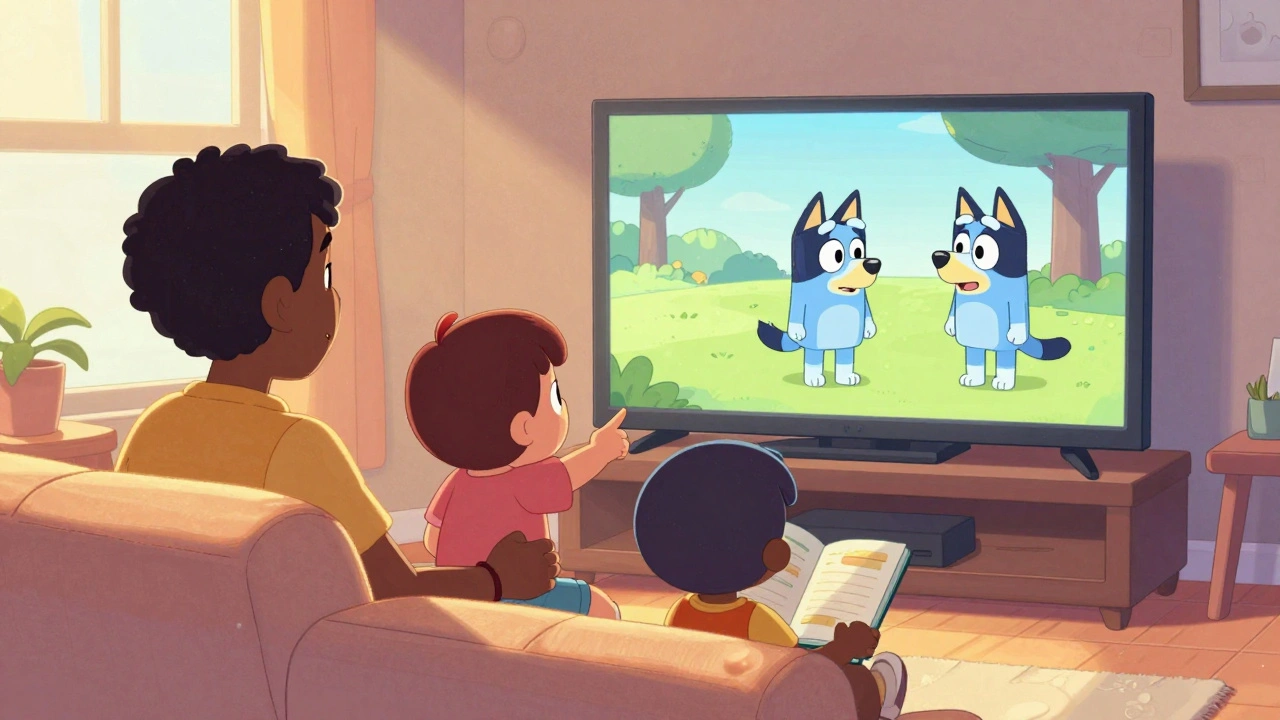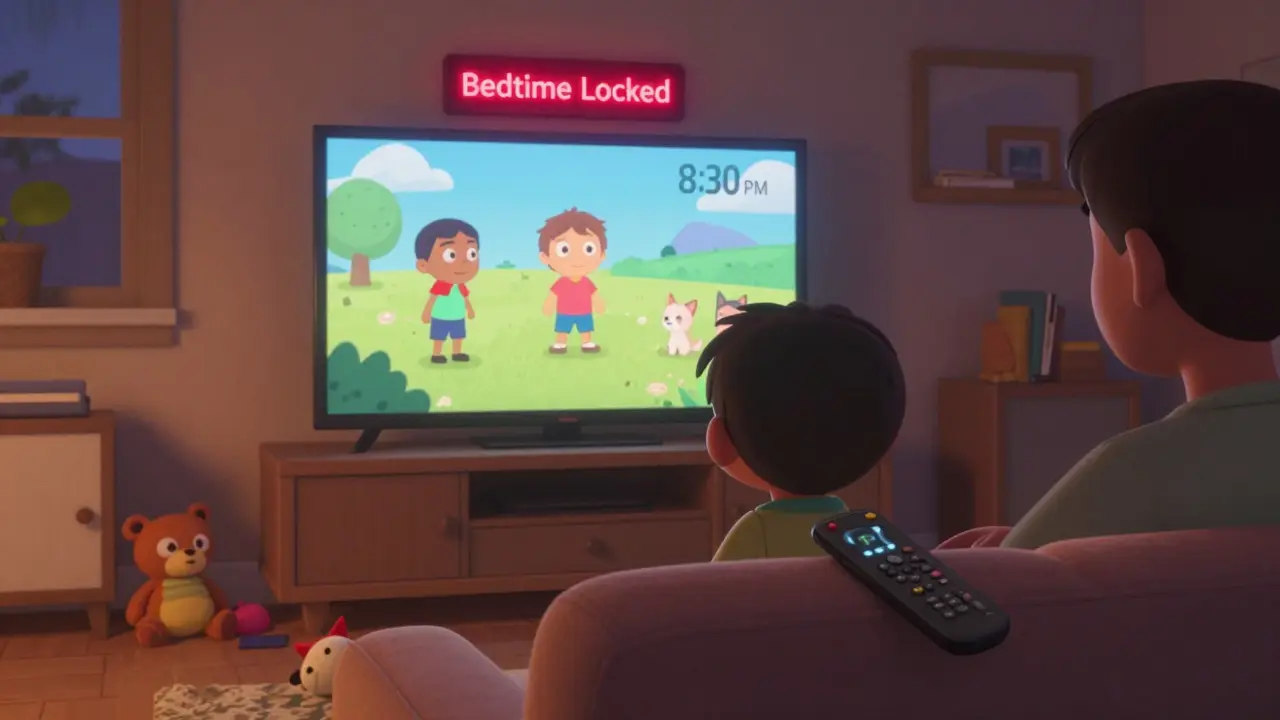

Every family has that moment. The kids are glued to tablets during dinner. The teenager is binge-watching a show at 2 a.m. The toddler just screamed because you took away the iPad. Sound familiar? You’re not alone. With streaming services, smartphones, and gaming consoles in every room, managing screen time isn’t just about limiting usage-it’s about setting clear, fair, and lasting boundaries.
Why a Family Media Agreement Works Better Than Rules You Yell
Rules that feel imposed don’t stick. Kids follow rules they help create. A family media agreement isn’t a punishment list. It’s a contract everyone signs-parents included. Think of it like a house rule for TV, phones, and tablets. No one gets to break it without consequences. And no one gets to ignore it because they’re ‘too busy’ or ‘just one more episode.’Real families have used this approach and seen real results. One mom in Ohio told me her 12-year-old started doing homework before grabbing the tablet-because he helped write the rule. His sister, who used to cry when the screen went dark, now asks, ‘How many minutes left?’ instead. That’s not magic. That’s structure.
What to Include in Your Family Media Agreement
A good agreement covers five key areas. Don’t skip any. Each one solves a different problem.- Device-free zones: No phones or tablets at the dinner table, in bedrooms after 9 p.m., or during family car rides. These aren’t punishments-they’re spaces where people connect.
- Daily screen time limits: Most experts agree on 1-2 hours of recreational screen time for kids over 6. Adjust based on age. A 10-year-old might get 90 minutes; a 15-year-old might get 2 hours. Track it with a timer or a free app like Google Family Link or Apple Screen Time.
- Streaming rules: No bingeing. One episode at a time, unless it’s a weekend movie night. No midnight scrolling through YouTube Shorts or TikTok. If they want to watch a show, they have to finish the current episode before starting the next.
- Content guidelines: No violent games, no horror movies, no unmonitored TikTok accounts. Use parental controls on Netflix, Disney+, YouTube Kids, and Roku. Set age ratings and block explicit content.
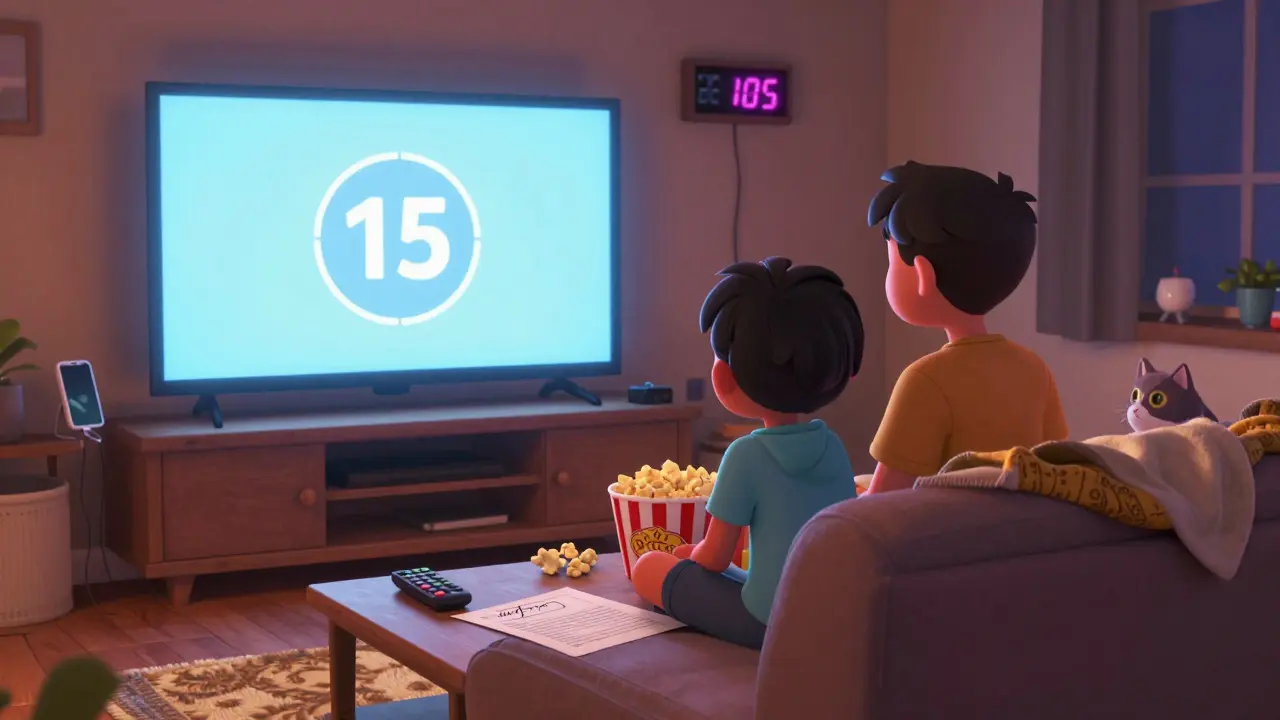
- Consequences and rewards: If the rules are broken, the device is put away for 24 hours. If they follow the rules for a week, they earn a family movie night with popcorn. Make it fair. Make it consistent.
How to Get Everyone on Board (Including the Teens)
You can’t force buy-in. You have to earn it. Here’s how:- Hold a family meeting. No screens allowed. Just you, your partner, and your kids.
- Ask: ‘What’s working? What’s not?’ Listen. Don’t interrupt. Teens will open up if they feel heard.
- Let them propose rules. ‘I think I should get 2 hours on weekends’-okay, let’s test it. ‘No phones after 10 p.m.’-fine, but what if you need to text your friend about homework? Build in exceptions.
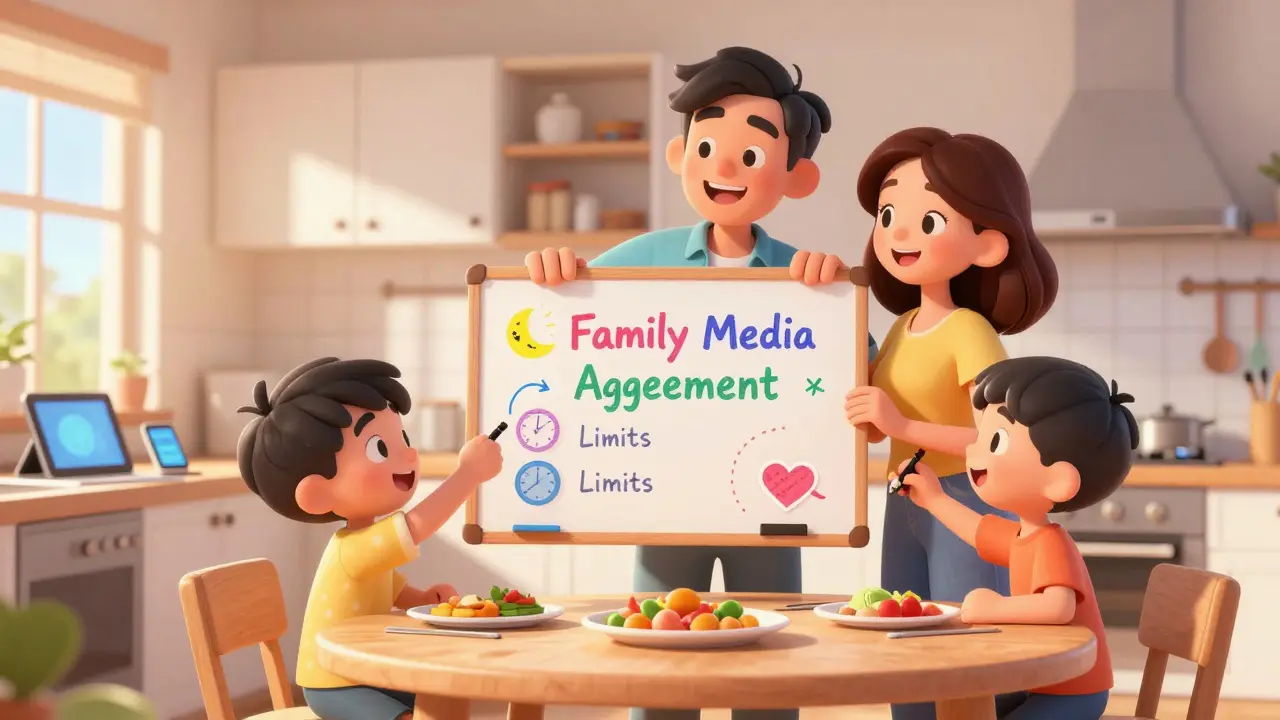
- Write it down. Use a whiteboard or print it on paper. Everyone signs it. Put it on the fridge.
- Parents follow the same rules. If you’re scrolling through Instagram after bedtime, you lose your phone for a day too. Kids notice hypocrisy. Don’t give them a reason to ignore the rules.
Tools That Make This Easier
You don’t have to guess or guesswork. These tools do the heavy lifting:- Google Family Link: Set daily limits, approve apps, lock devices remotely. Works on Android and Chromebooks.
- Apple Screen Time: Schedule downtime, block apps during homework hours, get weekly reports. Built into iPhones and iPads.
- Net Nanny: Filters content across all devices, blocks inappropriate websites, and tracks search history.
- Netflix Parental Controls: Create kid profiles with age-appropriate content. Turn off autoplay so they don’t accidentally watch a horror movie.
- YouTube Kids: Use this instead of regular YouTube. It filters out ads, comments, and inappropriate videos.
These tools aren’t spyware. They’re safety nets. You’re not watching their every move-you’re giving them space to learn responsibility.
What Happens When Rules Are Broken
The biggest mistake parents make? Giving in. One time. Then another. Then the whole agreement falls apart.When your child breaks a rule, don’t lecture. Don’t yell. Just say: ‘The rule says no screens after 9 p.m. Your phone is going to be put away until tomorrow.’ Then do it. No exceptions. Not even if they’re crying. Not even if your partner says, ‘Just this once.’
Consistency builds trust. Kids don’t need perfect parents. They need predictable ones.
And when they follow the rules? Celebrate. ‘You got your homework done and stuck to your screen time-let’s order pizza for dinner.’ Positive reinforcement works better than punishment.
How This Changes Family Life
After six months of following a family media agreement, families report:- More conversations at dinner
- Less arguing over who gets the TV
- Better sleep for kids and parents
- More outdoor play, board games, and reading
- Teens start asking for permission instead of waiting to get caught
One dad in Texas told me his 14-year-old started writing a script for a short film-because he had free time after putting his phone away. That’s the kind of change no app can create. Only structure can.
When to Update the Agreement
This isn’t a one-time thing. Kids grow. Their needs change. Update the agreement every 3-6 months. Ask:- Are the limits still fair?
- Is there a new app or platform we need to add?
- Are we being too strict or too loose?
- Did someone earn more freedom?
Let your 13-year-old propose a new rule. Maybe they want to watch a PG-13 movie with you. Maybe they want to use their phone for music while doing homework. Be open. Be flexible. But don’t let it slide into chaos.
Final Thought: It’s Not About Control. It’s About Connection.
Screen time isn’t the enemy. The problem is when screens replace real life. A family media agreement doesn’t take away devices. It brings back conversation, play, and presence.You’re not trying to be the screen police. You’re trying to raise kids who know how to use technology-without letting it use them.
What if my child says the rules are unfair?
Ask them to explain why. Then listen. Often, they’re not objecting to the rule-they’re objecting to feeling unheard. Use their feedback to adjust the agreement. Maybe the screen time limit is too low for their age, or they need more flexibility for school projects. A fair rule is one that’s been discussed, not imposed.
Can we use a phone as an alarm clock without breaking the rules?
Yes, but only if it’s used for that one purpose. Keep it on a charger outside the bedroom, or use a traditional alarm clock. If the phone is in the room, it becomes a distraction. Studies show even having a phone nearby reduces sleep quality. Let your child prove they can use it responsibly-then reconsider.
How do I handle a teenager who hides their device?
If they’re hiding it, they know the rules. The issue isn’t the device-it’s trust. Have a calm conversation: ‘I know you’re using it after hours. I’m not mad-I’m disappointed because we agreed on this.’ Then enforce the consequence. Don’t search their room. Don’t sneak. Just say, ‘If you can’t follow the rules, we’ll need to reset the agreement.’ Most teens will come back when they realize you mean what you say.
Do I need to monitor every app they use?
No. But you should know the top five apps they use most. Ask them to show you. Talk about what they like and why. If you see something concerning-like a chat group with strangers-don’t panic. Say, ‘I saw this. Can we talk about it?’ Open dialogue beats surveillance every time.
What if my partner doesn’t agree with the rules?
You need to be on the same page. If one parent says ‘yes’ and the other says ‘no,’ the kids will learn to play them against each other. Sit down alone with your partner. Say, ‘I want us to be consistent for the kids.’ Show them the agreement. Ask for their input. Compromise if needed. But don’t let the kids see division. They’ll exploit it.
Next Steps: Start Small, Stay Consistent
Don’t try to rewrite your whole family’s routine overnight. Pick one rule to start with. Maybe it’s no phones at dinner. Or no screens after 9 p.m. Stick with it for two weeks. Then add another. Slow progress beats big, broken promises.Your kids will test you. They’ll cry. They’ll argue. But they’ll also learn. And when they do, they’ll thank you-not now, but later, when they’re in college and their roommate is still scrolling at 3 a.m.